
Your Read is on the Way
Every Story Matters
Every Story Matters
The Hydropower Boom in Africa: A Green Energy Revolution Africa is tapping into its immense hydropower potential, ushering in an era of renewable energy. With monumental projects like Ethiopia’s Grand Ethiopian Renaissance Dam (GERD) and the Inga Dams in the Democratic Republic of Congo, the continent is gearing up to address its energy demands sustainably while driving economic growth.
Northern Kenya is a region rich in resources, cultural diversity, and strategic trade potential, yet it remains underutilized in the national development agenda.

Can AI Help cure HIV AIDS in 2025

Why Ruiru is Almost Dominating Thika in 2025

Mathare Exposed! Discover Mathare-Nairobi through an immersive ground and aerial Tour- HD

Bullet Bras Evolution || Where did Bullet Bras go to?
The miraa trade, often referred to as Kenya's “green gold,” has long been a cash crop powerhouse for regions like Meru, Embu, and Nyambene. Yet, beneath the surface of its economic promise lies a deeply fractured, underregulated industry plagued by erratic pricing and exploitation. Seeking to finally bring order to this lucrative yet lawless sector, the government, through the Ministry of Agriculture, issued a firm directive setting uniform prices for miraa.
Grade 1 miraa was priced at KSh 1,300 per kilogram, Grade 2 at KSh 700, and the specialty strain known as Allele at KSh 1,000. These rates weren’t arbitrarily chosen—they were meant to represent fair market value, ensuring farmers received a just return for their labor while also bringing predictability into the supply chain. In the eyes of the state, this reform marked a significant step toward transparency, economic justice, and long-overdue modernization of the miraa industry.
But as the ink dried on the directive, friction erupted on the ground. The bold push to stabilize the sector has instead ignited a bitter standoff that now threatens to destabilize an entire agricultural economy.
Traders have emerged as the first and most vocal line of resistance against the new pricing structure. From the trading centers in Maua to the export corridors at JKIA, the response has been largely the same: outright refusal to comply. Many of these traders are instead offering farmers less than half of the mandated prices, often hovering around KSh 400–500 per kilogram for Grade 1 produce.
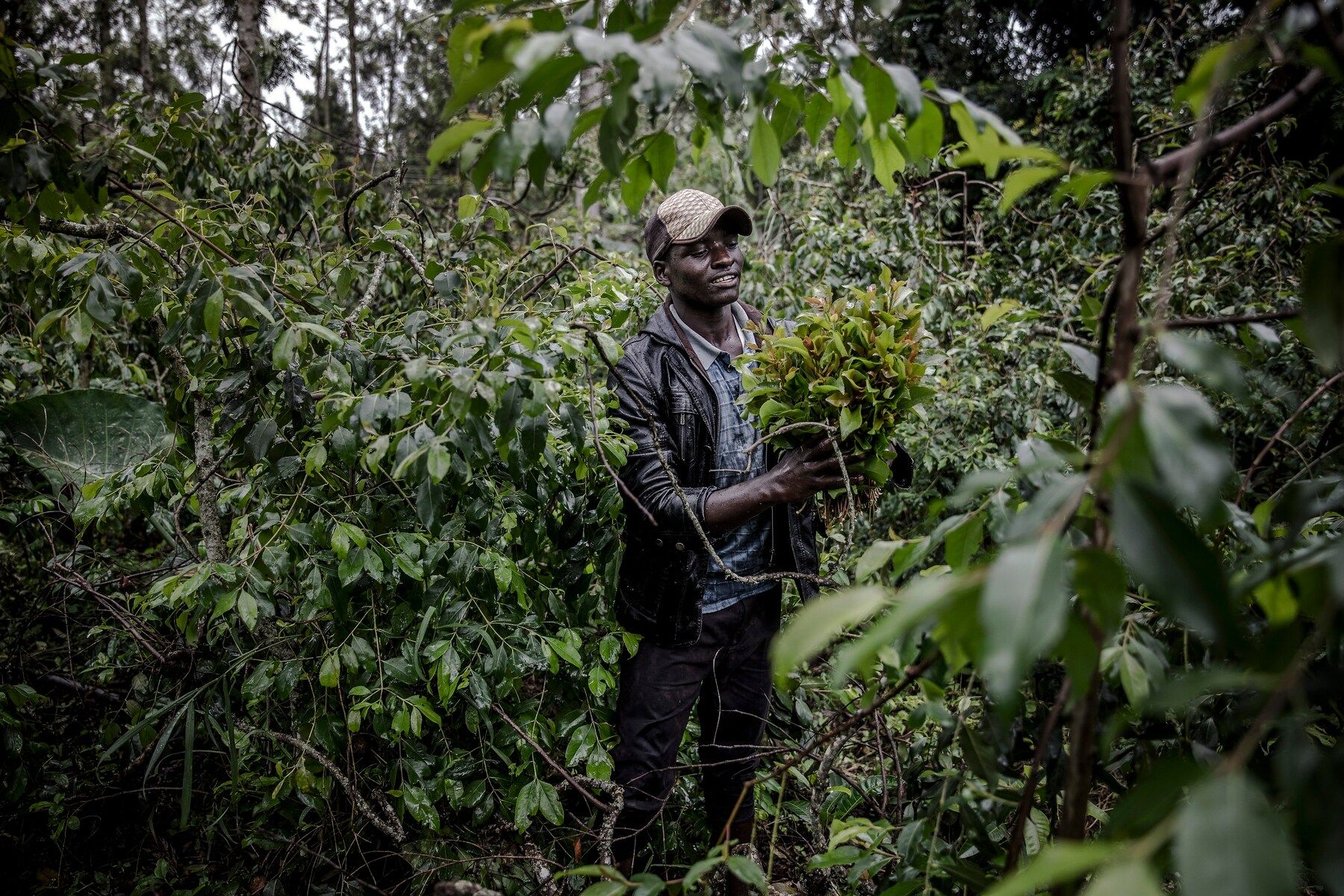
Their rationale, they say, lies in economic survival. They argue that the new prices are not rooted in market dynamics, and that the government failed to engage them meaningfully in consultations before rolling out the policy. Several claim that operational costs—ranging from transportation, taxation, export licensing, to security—make it impossible to offer farmers the new rates without sinking their own margins into the red.
In some regions, traders are even accused of quietly colluding to undercut farmers en masse, using collective price suppression to force desperate producers to sell at unsustainably low rates. Rather than achieving equity, the new directive is being treated as an obstacle—one that threatens the profit chains many traders have carefully built over years.
But this isn't simply a battle between traders and government policy. A deeper, more insidious layer is shaping the crisis—one dominated by powerful cartels and monopolistic entities that thrive in regulatory grey zones. At JKIA, an alleged cartel has gained tight control over export logistics, dictating terms, access, and ultimately pricing for outgoing miraa shipments. Traders who attempt to sidestep this system are often cut off or face insurmountable logistical hurdles.
Across the border in Somalia—a key destination for Kenyan miraa—a single importer has managed to monopolize the market. This monopoly sets restrictive quotas, negotiates prices unilaterally, and blocks competing Kenyan exporters through unofficial channels. The result is a manipulated supply chain where local producers and small traders are squeezed from both ends, their fate decided in backroom deals rather than open markets.
The Kenyan government, while aware of this manipulation, has done little to intervene across borders, leaving domestic stakeholders to fend for themselves in a rigged regional marketplace.
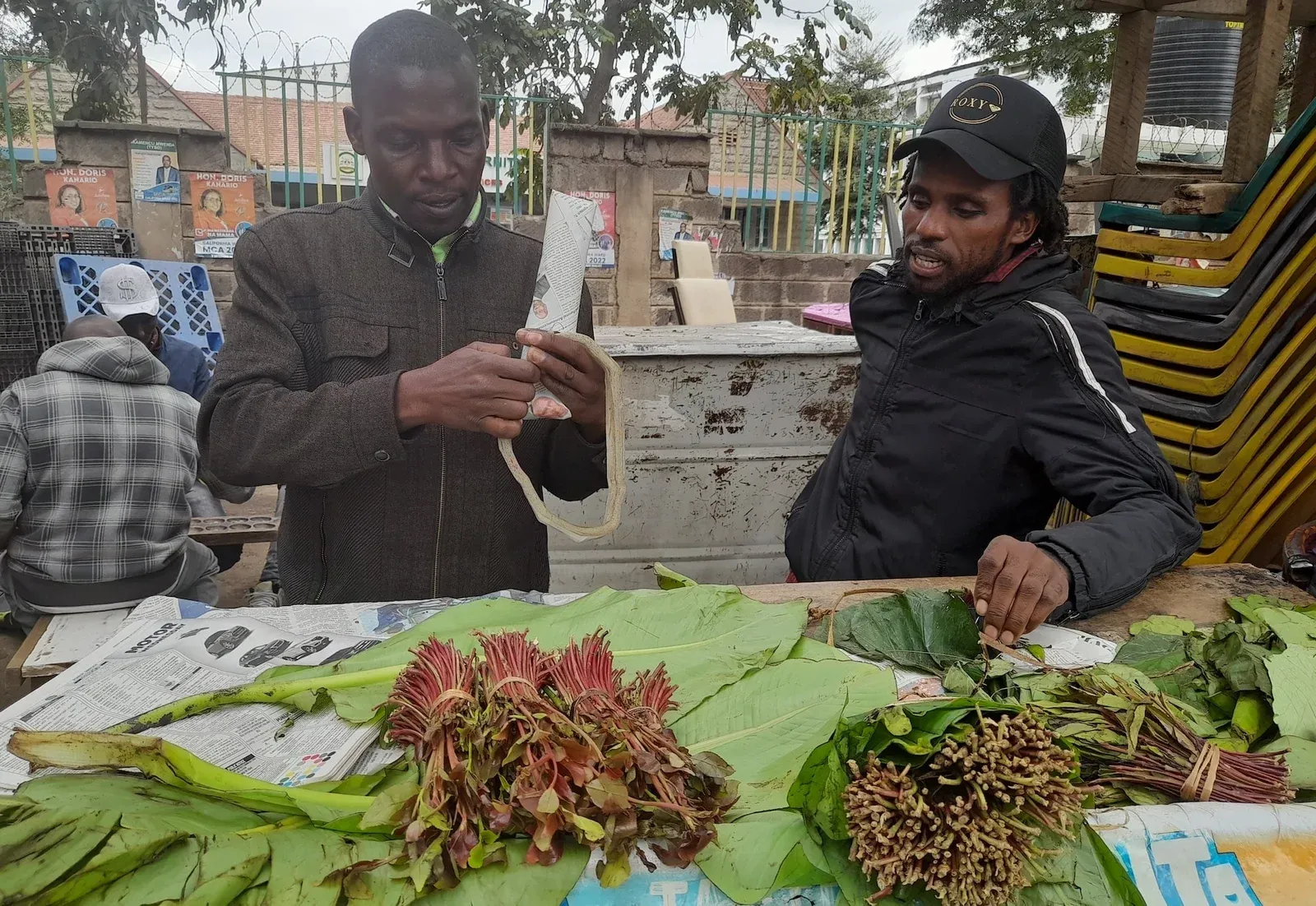
Caught in the crossfire between government policy, unyielding traders, and shadowy market forces, miraa farmers are bearing the heaviest burden. For them, the new prices represent a promise of fairness, a lifeline out of cycles of debt and dependency. But in reality, that lifeline remains elusive.
In many parts of Meru and Nyambene, farmers are unable to secure buyers at the new rates. They watch as their meticulously cultivated harvest wilts in storage or is sold off at massive losses. Others are forced to accept exploitative offers, knowing full well that holding out means starvation for their families. The price collapse has triggered a wave of frustration and hopelessness, with some farmers calling for a complete government takeover of the miraa trade, similar to state-run models for coffee or tea.
What makes this even more tragic is that miraa is a perishable product—its value deteriorates rapidly after harvesting. There is no room for stockpiling or strategic delays. Once picked, it must be sold, chewed, or dumped. And for too many farmers, dumping has become the new norm.
With traders continuing to defy the price mandate, the government has now shifted to enforcement. Through the Agriculture and Food Authority (AFA), a stern order has been issued: all miraa transporters and traders must register and obtain licenses or risk the immediate revocation of their operating rights. The compliance deadline of December 31, 2023, has passed, and now the noose is tightening.

In theory, licensing aims to weed out rogue actors, trace transactions, and ensure accountability throughout the supply chain. But in practice, enforcement remains murky. There's widespread confusion over how licensing will be implemented, who will be targeted first, and whether small-scale traders will be penalized while major cartel players continue business as usual.
Civil society groups have warned that such measures, if not delicately balanced, could backfire—pushing the entire miraa trade underground, where it would become harder to monitor and more vulnerable to criminal exploitation.
The standoff around miraa pricing isn’t just an economic dispute—it’s a proxy war over who controls Kenya’s most politically sensitive cash crop. The farmers, traders, and government all claim to represent the heart of the industry, but none have managed to stitch together a unified path forward.
What lies ahead is unclear. If the government doubles down on enforcement without addressing the underlying structural imbalances, the miraa trade could fracture completely. If traders continue their resistance, they risk a regulatory crackdown that could collapse entire networks. And if farmers continue to be left out of the equation, the country may soon witness the erosion of a once-thriving rural economy.
Only through transparent negotiations, cross-border cooperation, and bold dismantling of the entrenched cartels can this sector find its footing again. Until then, miraa remains a symbol of potential squandered and a ticking time bomb for Kenya’s agricultural future.






0 comments