
Your Read is on the Way
Every Story Matters
Every Story Matters
The Hydropower Boom in Africa: A Green Energy Revolution Africa is tapping into its immense hydropower potential, ushering in an era of renewable energy. With monumental projects like Ethiopia’s Grand Ethiopian Renaissance Dam (GERD) and the Inga Dams in the Democratic Republic of Congo, the continent is gearing up to address its energy demands sustainably while driving economic growth.
Northern Kenya is a region rich in resources, cultural diversity, and strategic trade potential, yet it remains underutilized in the national development agenda.

Can AI Help cure HIV AIDS in 2025

Why Ruiru is Almost Dominating Thika in 2025

Mathare Exposed! Discover Mathare-Nairobi through an immersive ground and aerial Tour- HD

Bullet Bras Evolution || Where did Bullet Bras go to?
In a surprising political maneuver, President William Ruto has dismissed Public Service Cabinet Secretary Justin Muturi, a move that signals growing tension within the highest levels of government. This decision, while dramatic, did not emerge out of nowhere. It follows weeks of public discord and internal strife that laid bare the fractures within Ruto's administration.
The tension between President Ruto and Justin Muturi has been building over time. Disagreements on critical governance issues, including public service operations and concerns over alleged human rights violations, have fueled the friction. Muturi's vocal opposition to certain policies and his perceived defiance of collective Cabinet responsibility placed him on a collision course with the President.
Reports suggest that Muturi expressed dissatisfaction with the handling of sensitive national matters, leading to speculation about his loyalty to the administration. The friction escalated when Muturi began challenging key decisions, casting a shadow over the unity of Ruto's Cabinet.
Matters reached a boiling point when Muturi began to voice his frustrations publicly. His remarks, often sharp and direct, questioned the efficiency of the administration and the President's approach to governance. These public statements, unusual for a sitting Cabinet Secretary, painted a picture of an administration struggling with internal cohesion.
Muturi's criticism touched on sensitive issues, including concerns over abductions and extrajudicial actions. His willingness to air grievances in the public arena signaled a break from the tradition of collective silence within the Cabinet. This public dissent did not sit well with the President's inner circle.
Further deepening the rift was Muturi's noticeable absence from several crucial Cabinet meetings. This move was interpreted as a silent protest against the administration's decisions. Such actions only served to amplify rumors of his discontent and fostered speculation about an inevitable political fallout.
The repeated absences were perceived as a direct challenge to Ruto's authority. For a President keen on projecting unity and strength, this behavior from a senior Cabinet member posed a significant political problem.
As the public feud escalated, voices within the government and political allies of the President began urging Muturi to step down. Critics accused him of undermining the government's agenda and violating the principle of collective responsibility. The pressure mounted, with some arguing that his continued presence in the Cabinet was untenable.

Muturi, however, remained defiant, refusing to resign and continuing to advocate for his views. This defiance created an impasse that ultimately left the President with limited options.
Faced with a growing internal crisis and increasing public scrutiny, President Ruto made the decisive move to dismiss Justin Muturi from his position as Public Service Cabinet Secretary. This action sent a clear message that dissent within the ranks would not be tolerated.
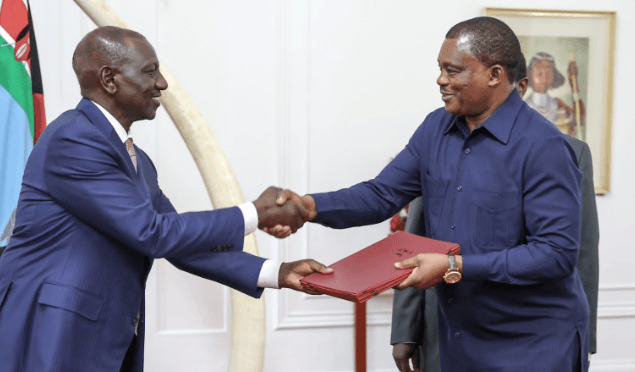
In Muturi's place, President Ruto swiftly appointed Mbeere Member of Parliament Geoffrey Kiringa Ruku as the new Public Service Cabinet Secretary. The appointment is viewed as an attempt to restore stability and reinforce loyalty within the Cabinet.
The sacking of Justin Muturi marks a significant turning point for President Ruto's administration. It highlights the delicate balance required to maintain loyalty while managing dissenting voices. By removing a high-profile critic from his inner circle, Ruto has reaffirmed his authority but also opened the door to further questions about internal stability.
Whether this move will strengthen his government or expose deeper fractures remains to be seen. What is clear, however, is that the President is willing to take bold steps to maintain control over his administration and assert his vision for the






0 comments