
Your Read is on the Way
Every Story Matters
Every Story Matters
The Hydropower Boom in Africa: A Green Energy Revolution Africa is tapping into its immense hydropower potential, ushering in an era of renewable energy. With monumental projects like Ethiopia’s Grand Ethiopian Renaissance Dam (GERD) and the Inga Dams in the Democratic Republic of Congo, the continent is gearing up to address its energy demands sustainably while driving economic growth.
Northern Kenya is a region rich in resources, cultural diversity, and strategic trade potential, yet it remains underutilized in the national development agenda.

Can AI Help cure HIV AIDS in 2025

Why Ruiru is Almost Dominating Thika in 2025

Mathare Exposed! Discover Mathare-Nairobi through an immersive ground and aerial Tour- HD

Bullet Bras Evolution || Where did Bullet Bras go to?
In what has become a highly charged controversy, Kenya’s Public Service Cabinet Secretary Moses Kuria delivered a blistering critique aimed squarely at political allies of President William Ruto. His frustration stems from a series of recent public events where Members of Parliament and other Kenya Kwanza politicians were seen distributing Teachers Service Commission (TSC) employment letters in elaborate, choreographed spectacles. To the crowd, it looked like progress. But to Kuria, it was political theater at its worst—a symptom of deeper decay within the systems of governance.
Kuria did not mince words. He described the practice as “embarrassing” and a “mockery” of public service ideals, expressing shock at how state functions have been hijacked for political gain. In his view, turning state employment into a campaign prop not only disrespects the individuals receiving those jobs, but it also undermines the very foundation of institutional neutrality that agencies like the TSC were designed to uphold. These jobs, meant to be a dignified acknowledgment of merit and effort, have been reduced to clout tokens handed out to secure voter loyalty.
In various counties, mostly in pro-government strongholds, video clips have emerged showing jubilant young teachers being handed TSC appointment letters in political rallies, sometimes with loud fanfare, choreographed music, and political branding in the background. Politicians delivering the letters frame themselves as benefactors—heroes fulfilling the government’s promise of job creation. The optics are powerful: cheering youth, cameras flashing, speeches about empowerment, all feeding into a narrative of a government delivering hope.

But Kuria argues that these performances are carefully orchestrated publicity stunts, meant more to inflate personal political profiles than to genuinely uplift communities. He finds it deeply problematic that appointments, which should be processed quietly and professionally by a constitutional commission, are instead being doled out on podiums like lottery prizes. The implied message is chilling: political connections may matter more than qualifications. This, Kuria warns, is a slippery slope—one that could corrupt the very soul of public administration.
Unemployment in Kenya, particularly among the youth, has remained stubbornly high. Thousands of graduates pour out of universities every year with limited job opportunities waiting for them. For these young Kenyans, employment isn't just about survival—it's about dignity, purpose, and contribution. Against this backdrop, the public distribution of job letters becomes more than a political spectacle; it sends a coded message: “Your turn comes only if you back the right people.”
Kuria highlighted this concern with urgency, stating that such displays risk psychologically manipulating young people into associating job opportunities with political patronage instead of personal merit. This can breed hopelessness among the qualified but unconnected. It can also create loyalty based not on policy or performance, but on favors and affiliations. In a country that has long struggled with systemic corruption and tribal favoritism, normalizing such behavior could have damaging long-term effects on public trust and national unity.
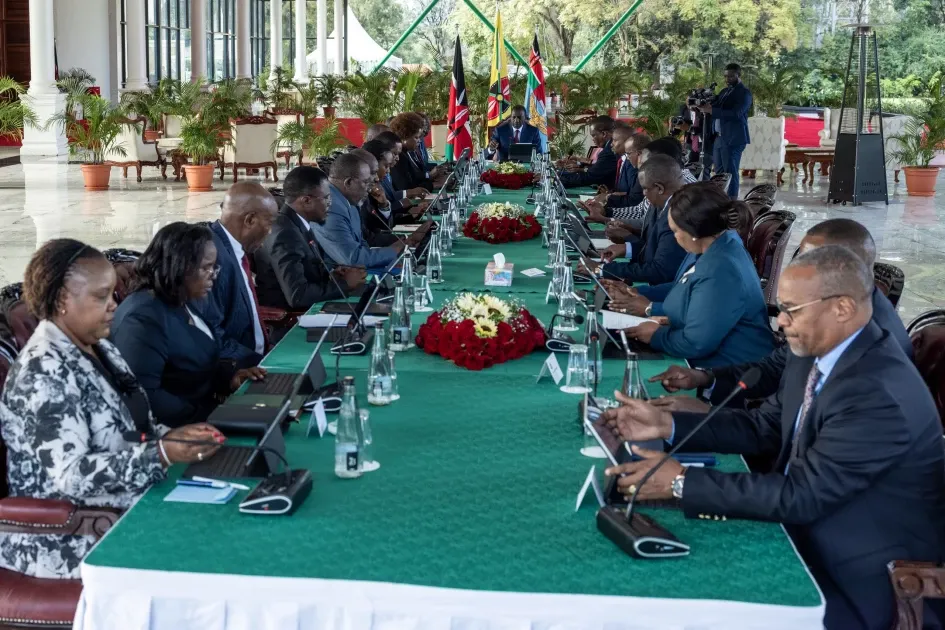
Though a senior member of Ruto’s cabinet, Kuria has increasingly carved out a reputation for speaking uncomfortable truths. His recent remarks may be seen not just as a critique of tactics, but as a subtle warning about the trajectory of the ruling coalition. Kenya Kwanza has sold itself as a movement of change—a new dawn for the hustler class. Yet if job distribution is now being used as a campaign gimmick, then what really differentiates this administration from its predecessors?
Some political observers view Kuria’s statement as a sign of growing unease within the coalition’s ranks. Behind closed doors, there may be friction between those who see politics as a game of optics and others like Kuria who are pushing for structural reforms and governance grounded in principle. His bold stance might spark broader discussions within Kenya Kwanza about the role of leadership in nurturing—not exploiting—the hopes of the next generation.
What Kuria ultimately demands is not just political restraint, but a return to foundational values. The civil service, he insists, must operate with integrity, professionalism, and a strict adherence to impartiality. He urges institutions like the TSC to reaffirm their constitutional independence, ensuring that recruitment processes are fair, transparent, and immune to political interference.
He also calls for a cultural shift among leaders: to stop chasing clout through empty gestures and to start investing in real, systemic change. Employment should never be a political favor; it should be a right earned through competence. Kuria’s message, while controversial, is deeply resonant. It speaks to the disillusionment many feel when governance becomes performance, and when real issues—like jobs, education, and healthcare—are reduced to hashtags and staged events.






0 comments