
Your Read is on the Way
Every Story Matters
Every Story Matters
The Hydropower Boom in Africa: A Green Energy Revolution Africa is tapping into its immense hydropower potential, ushering in an era of renewable energy. With monumental projects like Ethiopia’s Grand Ethiopian Renaissance Dam (GERD) and the Inga Dams in the Democratic Republic of Congo, the continent is gearing up to address its energy demands sustainably while driving economic growth.
Northern Kenya is a region rich in resources, cultural diversity, and strategic trade potential, yet it remains underutilized in the national development agenda.

Can AI Help cure HIV AIDS in 2025

Why Ruiru is Almost Dominating Thika in 2025

Mathare Exposed! Discover Mathare-Nairobi through an immersive ground and aerial Tour- HD

Bullet Bras Evolution || Where did Bullet Bras go to?
Teachers across Kenya are expressing growing dissatisfaction following the recent signing of a Collective Bargaining Agreement (CBA) between the Teachers Service Commission (TSC) and teachers’ unions. Many educators have described the salary increments in the agreement as minimal and demeaning, sparking widespread discontent.
The tension was brought to the forefront during a government function in Malava, Kakamega County, where Prime Cabinet Secretary Musalia Mudavadi faced direct criticism from a teacher representative. The incident occurred during a forum attended by over 4,000 teachers and government officials.
During the event, Wilbroda Shinanda, the Kakamega women’s representative for the Kenya Union of Post-Primary Education Teachers (KUPPET), voiced serious concerns on behalf of the teaching fraternity. She questioned the adequacy of teachers' medical cover and the impact of multiple salary deductions, including those for health insurance, housing levy, and loans.
She challenged the government's decision to maintain multiple deduction schemes without offering a consolidated, quality healthcare system for teachers. The concern highlighted disparities between teachers’ benefits and those enjoyed by high-ranking public officials.
The teacher representative further criticized the Career Progression Guidelines (CPG), claiming it had caused stagnation in career advancement. She highlighted the lack of recognition for years of service and academic qualifications, noting that some teachers remain in the same job group for extended periods, even when working alongside former students.
The dissatisfaction was compounded by reports that some teachers only received salary increases as low as Ksh.29, further fueling perceptions of neglect and unfair treatment.
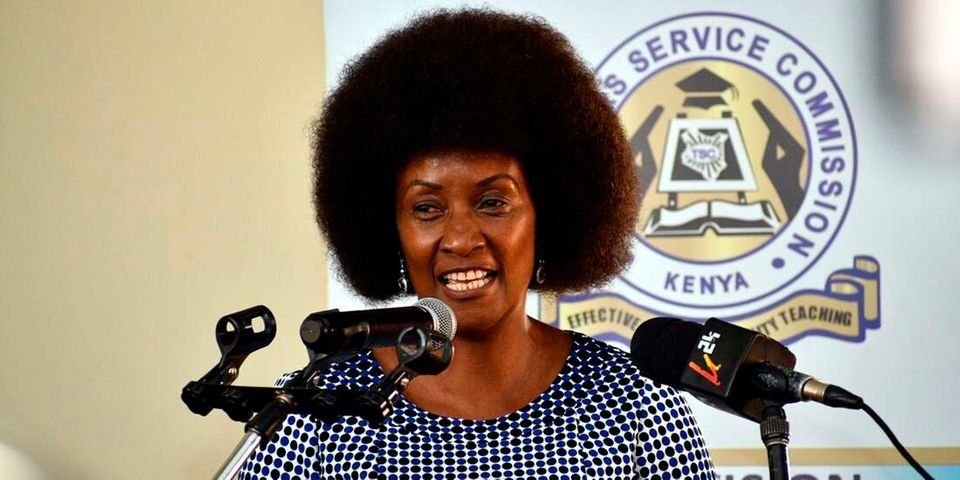
In response to the outcry, the government acknowledged the teachers’ grievances. Officials stated that consultations are ongoing with the Teachers Service Commission and other stakeholders to improve the situation, particularly in regard to integrating teachers into Universal Health Coverage (UHC).
They also assured the audience that plans are in place to review and implement a transparent and fair promotion process in coordination with the Ministry of Education.
The forum, held at Tande Secondary School, took an unexpected turn from a routine government event to a platform for raw, honest feedback. Teachers in attendance supported the calls for change, highlighting the urgency for meaningful reform.
The open challenge to national leadership has since gained traction online, with many Kenyans applauding the courage to speak out. The incident has reignited conversations around the state of public education, teacher compensation, and accountability within the education system.
The recent forum in Kakamega County served as a stark reminder of the unresolved issues facing Kenyan teachers. From inadequate salaries to flawed promotion structures and insufficient healthcare benefits, educators are calling for more than just promises—they are demanding systemic reforms that reflect their contribution to the country’s development.






0 comments