
Your Read is on the Way
Every Story Matters
Every Story Matters
The Hydropower Boom in Africa: A Green Energy Revolution Africa is tapping into its immense hydropower potential, ushering in an era of renewable energy. With monumental projects like Ethiopia’s Grand Ethiopian Renaissance Dam (GERD) and the Inga Dams in the Democratic Republic of Congo, the continent is gearing up to address its energy demands sustainably while driving economic growth.
Northern Kenya is a region rich in resources, cultural diversity, and strategic trade potential, yet it remains underutilized in the national development agenda.

Can AI Help cure HIV AIDS in 2025

Why Ruiru is Almost Dominating Thika in 2025
Mathare Exposed! Discover Mathare-Nairobi through an immersive ground and aerial Tour- HD

Bullet Bras Evolution || Where did Bullet Bras go to?
In a landmark move that could redefine how governments tackle youth unemployment, Kenya is distributing Ksh50,000 to tens of thousands of young citizens—not as welfare, but as capital. This bold shift positions Kenya’s youth not as beneficiaries of state support, but as central players in national economic revival. The government is making a statement: if the country is to grow, it must be built by those who have long been on the fringes—its youth.
This initiative, spearheaded by Deputy President Kithure Kindiki and supported by the World Bank, is channeled through a new program called NYOTA (National Youth Opportunities Towards Advancement). It is not a charity scheme or a cash handout for temporary relief. It’s an aggressive, five-year blueprint to transform hustlers into entrepreneurs and job creators.
For decades, young people in Kenya have struggled to break free from cycles of unemployment and informal hustle culture. With limited access to formal jobs, many survive on gigs, inconsistent day-labor, or micro-trade in crowded urban centers. The NYOTA initiative aims to end this era of subsistence and launch a new one rooted in self-reliance and sustainable growth.
Rather than wait for companies or government jobs that rarely come, youth aged 18–29 are being asked to flip the script: take the capital, start your business, and become the employer. Each of Kenya’s 1,450 wards will see 70 youth selected to receive funding. That amounts to over 110,000 new micro-entrepreneurs who will be injected with both funds and hope.
This change in development thinking is radical. Instead of focusing purely on vocational training or internships, the government is providing real capital—Ksh50,000 per person—to seed or scale viable small businesses. The message is clear: if you’ve got the vision, the state will back you.
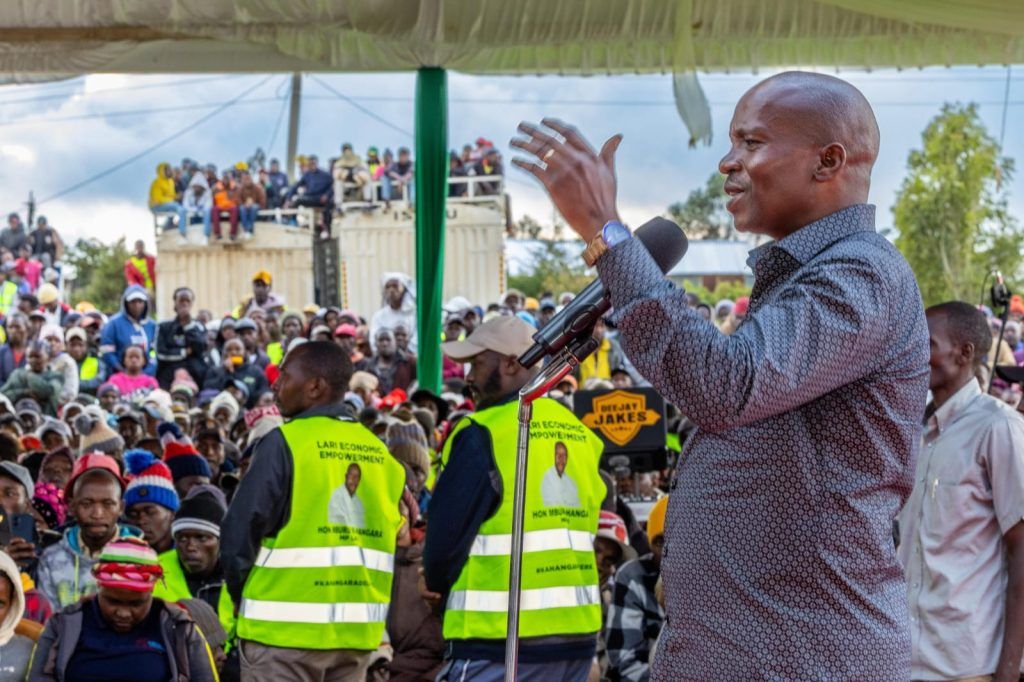
The financial machinery behind NYOTA is significant. The government has already released Ksh28 billion to fuel the program, aiming to ensure each selected youth receives their Ksh50,000 starting this month. Registration closed on May 15, meaning only pre-vetted, youth-led businesses will be eligible.
Funds will not go to passive applicants or speculative ideas. Kindiki emphasized that the money is for serious business ventures that can stimulate real economic activity. From rural tailoring shops and tech repair kiosks to urban delivery services and agri-business startups, the program envisions a grassroots economic awakening.
To ensure proper use, the distribution will be managed through the Micro and Small Enterprises Authority (MSEA), which is expected to track and monitor the progress of each funded venture. There will also be collaboration with county governments and ward representatives to ensure the system is as fair and transparent as possible.
While NYOTA is youth-focused, Deputy President Kindiki made it clear that the government hasn’t forgotten about older citizens. He announced that other programs are being designed to support small-scale traders, like market women (commonly known as mama mboga), fishmongers, and other informal sector players.
The plan is to build an inclusive economy where all age groups have pathways to financial independence. But there’s no doubt—the youth are being positioned as the country’s new economic engine. With targeted investment and minimal bureaucracy, the government hopes to unlock a demographic dividend that has long gone untapped.
Despite the optimism, questions remain. Can this ambitious program be effectively monitored? Will the funds reach the right people without being swallowed by bureaucracy or corruption? Can young entrepreneurs, many of whom are first-time business owners, turn Ksh50,000 into a sustainable income?

There is also the danger of oversaturation—what happens when thousands of similar small businesses (e.g., mobile money agents or boda-boda operators) spring up in the same region? Without market research, mentorship, and follow-up support, some of these ventures may collapse under competition or poor planning.
The government insists it has considered these risks. NYOTA isn’t meant to be a one-time transfer. It’s the opening of a longer journey that includes training, mentorship, and—potentially—access to second-round funding for those who prove themselves.
What NYOTA ultimately offers is more than money—it’s a rebranding of youth identity in Kenya. From “idle” to “innovator,” from “hustler” to “founder.” This program isn’t just about economic inclusion; it’s about rewriting the cultural expectations of what young people can achieve.
If successful, NYOTA could become one of the continent’s most transformative government-led youth programs. It could inspire similar models in other African nations facing identical struggles—rapid population growth, high youth unemployment, and a growing informal sector.
For now, the first wave of funding begins. The real test will be in the months ahead as those who received their Ksh50,000 begin their entrepreneurial journey. Will it change their lives—and Kenya’s trajectory? Or will it fade into another chapter of unrealized policy?






0 comments