
Your Read is on the Way
Every Story Matters
Every Story Matters
The Hydropower Boom in Africa: A Green Energy Revolution Africa is tapping into its immense hydropower potential, ushering in an era of renewable energy. With monumental projects like Ethiopia’s Grand Ethiopian Renaissance Dam (GERD) and the Inga Dams in the Democratic Republic of Congo, the continent is gearing up to address its energy demands sustainably while driving economic growth.
Northern Kenya is a region rich in resources, cultural diversity, and strategic trade potential, yet it remains underutilized in the national development agenda.

Can AI Help cure HIV AIDS in 2025

Why Ruiru is Almost Dominating Thika in 2025

Mathare Exposed! Discover Mathare-Nairobi through an immersive ground and aerial Tour- HD

Bullet Bras Evolution || Where did Bullet Bras go to?
In Kenya's high-stakes political arena, disagreement often walks a tightrope between opposition and outright betrayal. Trans Nzoia Governor George Natembeya now finds himself at the edge of that line. Following his stern criticism of President Ruto’s administration, a firestorm erupted—not over policy, but over something far more personal: his nationality. What began as ideological friction has metastasized into an identity inquisition, signaling a darker undertone in Kenya’s political discourse.
Natembeya’s rebuttal was not just a clarification—it was a challenge. A challenge to the increasing trend of equating criticism with treason. He labeled the accusations as not only absurd but inflammatory, warning that such rhetoric weakens the unity of the nation by reducing patriotism to party loyalty.
Questioning someone’s nationality is a potent political tactic. It implies not just that they’re wrong, but that they don’t belong. And for Natembeya, who has built a career navigating the pressures of public service from regional security posts to the governor’s office, the attack is as personal as it is strategic.
His critics have attempted to reposition him—not as a concerned leader raising security red flags, but as a hostile outsider with ulterior motives. The irony? Natembeya was born, raised, and educated in Kenya, and has spent decades serving it. The suggestion that his citizenship is up for debate reads less like concern and more like a desperate smear.
The controversy sparking this storm revolves around Natembeya’s opposition to the scrapping of ID vetting processes in Kenya’s northeastern border regions. He warned that unchecked issuance of national IDs in these vulnerable areas could compromise national security, given the region’s history with cross-border infiltration and extremist movement.
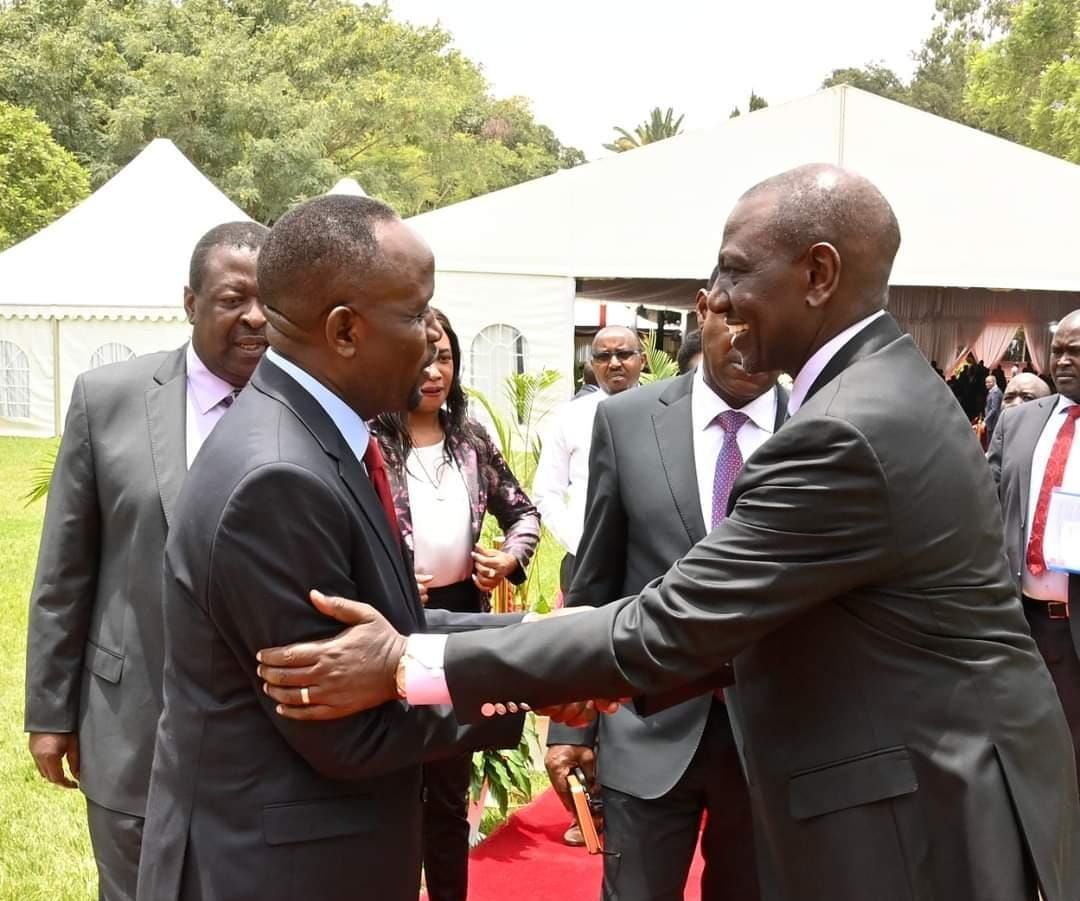
But his nuanced position was swiftly distorted into a narrative of ethnic discrimination. It’s a familiar trick in modern Kenyan politics—reduce complex security policy into sound bites of tribal alienation. Natembeya argues that his concerns are rooted in safeguarding sovereignty, not in sowing division. But nuance rarely survives in political brawls.
Despite the attacks, Natembeya refuses to soften his tone. Instead, he’s drawing a sharp line: Kenyan citizenship isn’t a favor granted by political consensus. It’s a right earned through history, service, and commitment to the nation’s well-being. In his words and actions, he’s staking a claim not just to his birthplace, but to his right to challenge national direction without being labeled an enemy.
He outlines his approach in three unshakable points: he will speak boldly on issues of governance, lead justly for all communities under his care, and serve diligently under the rule of law. It’s a pointed contrast to a political culture that often rewards silence, conformity, and backroom deals.
What Natembeya is confronting is bigger than a personal smear. It’s the growing political impulse to police who qualifies as “Kenyan enough” based on loyalty to those in power. His pushback is less about self-defense and more about preserving space for dissent in a fragile democracy.
In an age where national identity is wielded like a weapon, Natembeya’s resistance is not just timely—it’s essential. He may have become a target, but in standing his ground, he’s also become a symbol. A symbol of what happens when truth speaks louder than loyalty tests.






0 comments