
Your Read is on the Way
Every Story Matters
Every Story Matters
The Hydropower Boom in Africa: A Green Energy Revolution Africa is tapping into its immense hydropower potential, ushering in an era of renewable energy. With monumental projects like Ethiopia’s Grand Ethiopian Renaissance Dam (GERD) and the Inga Dams in the Democratic Republic of Congo, the continent is gearing up to address its energy demands sustainably while driving economic growth.
Northern Kenya is a region rich in resources, cultural diversity, and strategic trade potential, yet it remains underutilized in the national development agenda.

Can AI Help cure HIV AIDS in 2025

Why Ruiru is Almost Dominating Thika in 2025

Mathare Exposed! Discover Mathare-Nairobi through an immersive ground and aerial Tour- HD

Bullet Bras Evolution || Where did Bullet Bras go to?
The National Youth Service (NYS) is undergoing one of the boldest transformations in its history — a shift that reimagines it not as a military-lite institution, but as a thriving economic driver powered by the country’s youthful energy. In an announcement that signals a major departure from traditional service models, Public Service Cabinet Secretary Geoffrey Ruku outlined a sweeping plan to reposition NYS at the heart of Kenya’s development agenda.
This isn’t simply about increasing numbers; it’s about redefining purpose. The government plans to recruit over 100,000 young people, not for marching drills, but to turn NYS into a national force in agriculture, small industry, environmental conservation, and innovation. It’s a dramatic reinvention, one that acknowledges the changing demands of Kenya’s economy and the urgent need to empower its growing youth population with real, marketable skills.
Gone are the days when NYS merely trained recruits for disciplined service and occasional public works. Today’s vision places young people directly into the economic engine room. Under the new model, NYS members will be equipped with hands-on experience in modern farming techniques, business management, construction, fish farming, and renewable energy projects. Institutions like the Yatta Field Station are already setting the pace, converting hundreds of acres into productive agricultural fields, drastically increasing maize yields, and producing commercial-grade avocado seedlings for domestic and international markets.
The philosophy is simple but profound: young people must not just be trained to serve — they must be trained to lead industries, create jobs, and generate wealth. NYS will become a launchpad, turning service years into entrepreneurial journeys that continue to ripple outward long after their official service ends.
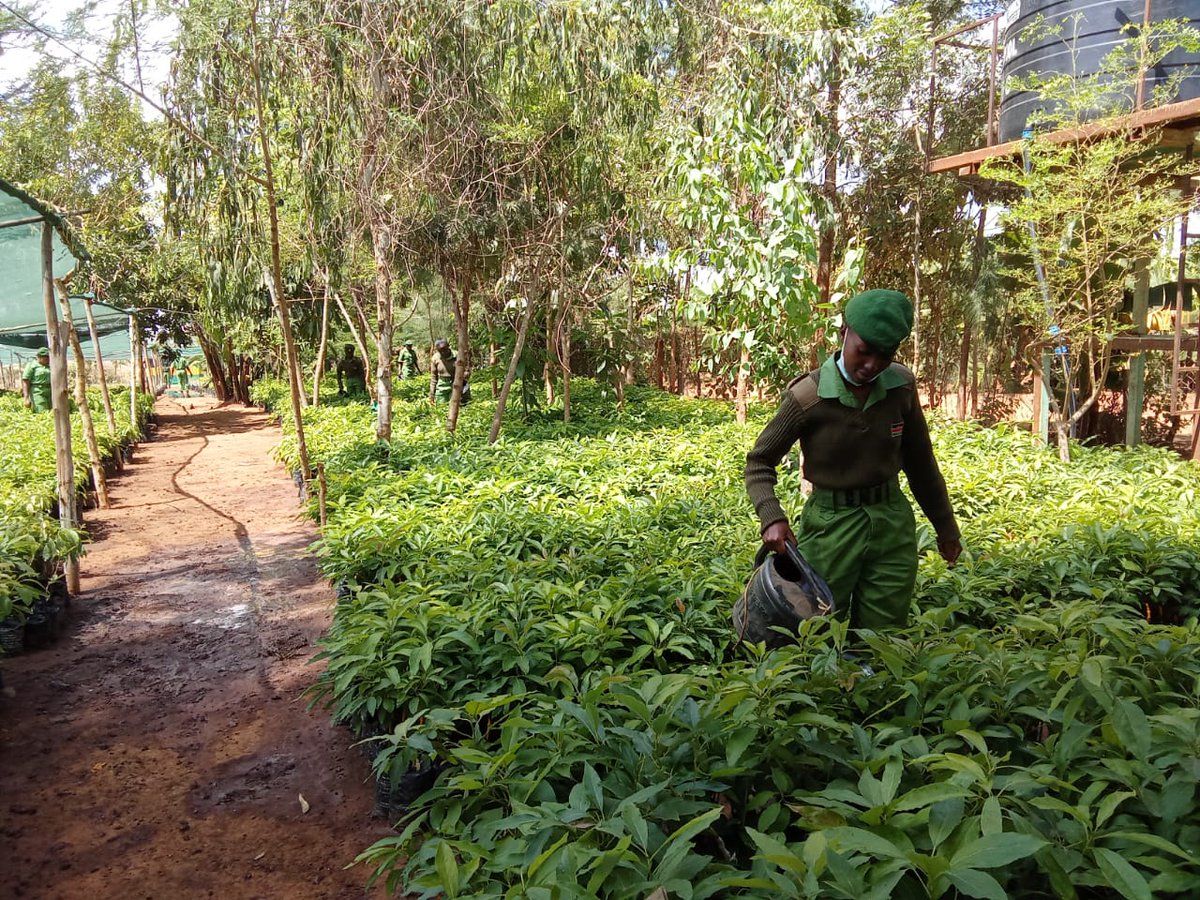
At the core of the new NYS is commercialization — a strategic pivot that could change everything about how the institution operates. Plans are already in motion to amend the NYS legal framework, allowing the organization to produce, market, and sell its goods and services competitively. This would be a radical break from NYS’s past dependence on government allocations. In the near future, NYS is expected to operate semi-autonomously, with its own revenue streams coming from agricultural products, construction projects, environmental services, and even innovations in green technology.
Products like NYS-branded avocados, construction services, and eco-solutions could become regular features in Kenyan markets, proving that state-run initiatives can be both socially impactful and financially viable. It’s a model that, if successful, could serve as a blueprint for other public sector agencies stuck in cycles of dependency and inefficiency.
Another powerful pillar of NYS’s reinvention is its active role in national environmental and sustainability efforts. In the coming months, NYS plans to deploy thousands of its recruits to lead cleanup and restoration projects along critical natural resources like the Nairobi River. Beyond cleanups, NYS teams are expected to be at the forefront of reforestation, renewable energy installations, and green infrastructure development across the country.
These initiatives are not only urgent responses to climate change but also opportunities to skill the youth in industries that are poised for explosive growth in the coming decades. By positioning NYS recruits in these frontline projects, Kenya is creating a new generation of green entrepreneurs, conservation leaders, and sustainability advocates — all of whom will be vital in safeguarding the country’s ecological future.
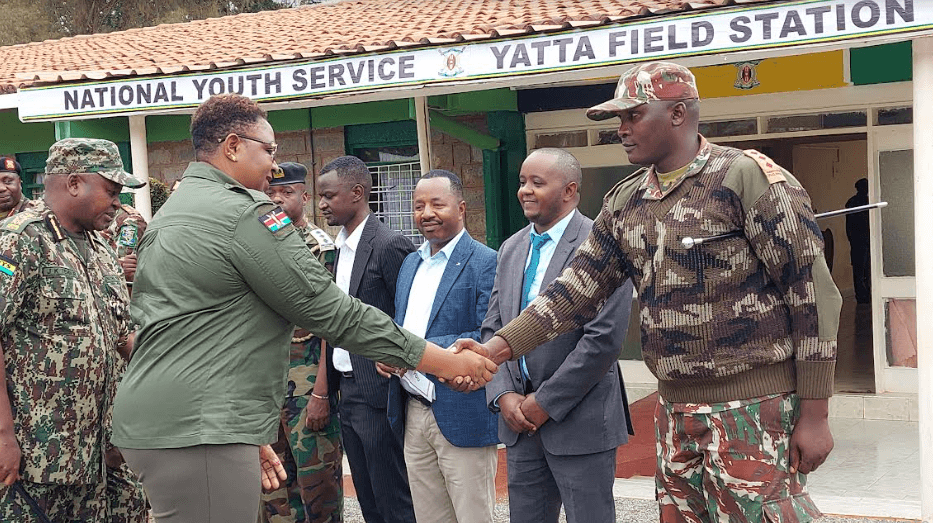
At its heart, the NYS transformation is about building resilience — not just for the institution but for the country. By breaking the chains of financial dependency and focusing on self-sustaining operations, NYS could become a model of public sector efficiency and innovation. Already, the Yatta Field Station’s successes in scaling up maize farming and avocado production offer a glimpse into what a commercially-oriented NYS could achieve.
But the vision stretches even further: imagine NYS becoming a major player in food security, infrastructure development, and even technology incubation. Imagine thousands of young people leaving NYS each year, not just disciplined, but equipped with the tools, capital, and mindset to start businesses, run farms, and lead local development initiatives. The multiplier effect on Kenya’s economy could be enormous, fundamentally altering the country’s youth unemployment narrative and creating new growth sectors across every county.
Ultimately, this reimagining of NYS reflects a deeper belief: that Kenya’s future lies in the hands of its young people. Rather than treating youth as a problem to be solved, the government is betting that with the right investment, they can be the architects of Kenya’s next chapter. Through agriculture, innovation, environmental stewardship, and entrepreneurship, NYS is being rebuilt not as an end point, but as a beginning — a dynamic springboard from which thousands of young Kenyans will launch careers, businesses, and legacies. If executed well, NYS 2.0 could stand as one of the most significant nation-building projects in Kenya’s modern history, reshaping how public service is defined and celebrated.






0 comments