
Your Read is on the Way
Every Story Matters
Every Story Matters
The Hydropower Boom in Africa: A Green Energy Revolution Africa is tapping into its immense hydropower potential, ushering in an era of renewable energy. With monumental projects like Ethiopia’s Grand Ethiopian Renaissance Dam (GERD) and the Inga Dams in the Democratic Republic of Congo, the continent is gearing up to address its energy demands sustainably while driving economic growth.
Northern Kenya is a region rich in resources, cultural diversity, and strategic trade potential, yet it remains underutilized in the national development agenda.

Can AI Help cure HIV AIDS in 2025
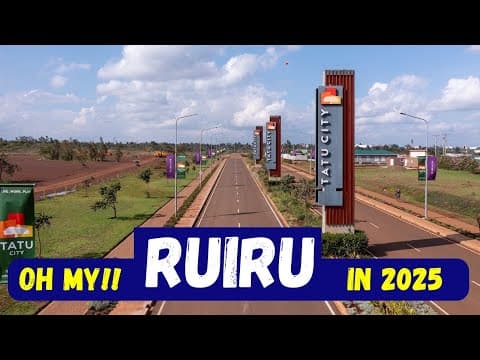
Why Ruiru is Almost Dominating Thika in 2025

Mathare Exposed! Discover Mathare-Nairobi through an immersive ground and aerial Tour- HD

Bullet Bras Evolution || Where did Bullet Bras go to?
Kenya’s streets are buzzing with the sound of motorbikes, each one often ridden by a young man—or increasingly, a young woman—trying to make ends meet. The bodaboda sector has exploded over the last decade, becoming one of the largest informal employment avenues in the country. But the growing number of youth turning to this job isn’t a sign of entrepreneurial spirit alone—it’s a loud, clear cry for help. For most, it’s not about freedom, it’s about survival.
With the cost of living on the rise and job opportunities shrinking, bodaboda riding has become a lifeline for Kenya’s youth. It’s one of the few remaining jobs that doesn’t ask for degrees, connections, or startup capital. If you can ride and hustle, you can earn. That’s the basic formula. The barriers are low, and the rewards, though unstable, are immediate. But underneath this booming business lies a reality that’s both troubling and urgent.
Kenya has made massive strides in education access. Universities are full, technical colleges are expanding, and thousands graduate each year with skills and hope. But these credentials often lead nowhere. The number of decent-paying, stable jobs has failed to grow in step with the number of educated youth. As a result, degrees are collecting dust while their holders hit the road—literally.
Young people are waking up to the hard truth: the market doesn’t care much about their diplomas. Companies want experience, or they want to pay less than a living wage. Government jobs are few, and the private sector is saturated. So instead of sitting idle, many turn to what’s available—riding motorbikes for quick cash. It’s not what they studied for, but it keeps them going.

In a society where waiting years for an interview feels like a punishment, the bodaboda business offers instant results. Riders can start earning within days. All it takes is a motorbike—many get them on credit or lease-to-own deals—and the will to hustle from dawn to dusk. In busy towns or cities, a rider can make enough to feed a family, pay rent, and keep the bike running.
This kind of fast entry and daily pay is seductive, especially for youth from poor backgrounds or rural areas. It’s independence, and it’s income. But the costs are high. Riders face long hours, brutal traffic, accidents, and poor earnings when demand dips. There are no safety nets, no health cover, no job security. It’s a risky grind with no promise of upward mobility.
What’s often missed in this conversation is that most youth didn’t dream of riding bikes for a living. Many had ambitions to become doctors, teachers, engineers, or business owners. The bodaboda path is not a first choice; it’s often the last option. And it’s not a failure of the youth—it’s a failure of the system to support them.
Government initiatives like youth empowerment funds, internships, and training programs have tried to fill the gap, but they rarely reach enough people or offer long-term solutions. Corruption, bureaucracy, and underfunding blunt their impact. Meanwhile, the bodaboda sector—unregulated, informal, and often ignored—keeps absorbing more young people each day.

In rural areas, traditional sources of income like farming are no longer dependable. Climate change, poor market access, and lack of investment have made agriculture unattractive. Young people flee to urban centers hoping for better luck. But cities are no gold mine either. With too many riders chasing too few customers, incomes are shrinking and competition is fierce. Accidents, theft, and exploitation are on the rise, turning what was once seen as an easy gig into a daily gamble.
What’s emerging is a generation stuck between dreams and survival. Many riders still hope to exit the trade and start businesses, go back to school, or find better jobs. But the longer they ride, the harder it becomes to switch paths. The job pays just enough to keep them riding—but not enough to invest in something else.
The bodaboda sector is not the enemy. In fact, it has provided critical services and kept millions afloat. But the danger lies in it becoming the default career path for a country’s most energetic and educated demographic. If Kenya can’t channel its youth into more productive, secure, and fulfilling work, the costs—economic, social, and political—will be massive.






0 comments