
Your Read is on the Way
Every Story Matters
Every Story Matters
The Hydropower Boom in Africa: A Green Energy Revolution Africa is tapping into its immense hydropower potential, ushering in an era of renewable energy. With monumental projects like Ethiopia’s Grand Ethiopian Renaissance Dam (GERD) and the Inga Dams in the Democratic Republic of Congo, the continent is gearing up to address its energy demands sustainably while driving economic growth.
Northern Kenya is a region rich in resources, cultural diversity, and strategic trade potential, yet it remains underutilized in the national development agenda.

Can AI Help cure HIV AIDS in 2025

Why Ruiru is Almost Dominating Thika in 2025

Mathare Exposed! Discover Mathare-Nairobi through an immersive ground and aerial Tour- HD

Bullet Bras Evolution || Where did Bullet Bras go to?
The wildebeest migration is one of the most extraordinary wildlife spectacles on Earth, often described as the “Greatest Show on Earth.” Each year, millions of wildebeest, zebras, and gazelles move across the Serengeti-Mara ecosystem in search of greener pastures. Kenya’s Maasai Mara National Reserve offers one of the best stages to witness this incredible phenomenon.
The migration is a continuous, circular journey that involves over 1.5 million wildebeest accompanied by hundreds of thousands of zebras and gazelles. It begins in Tanzania’s Serengeti, where calving season occurs around January to March. As the dry season sets in, the herds move north toward Kenya’s Maasai Mara, usually arriving between July and October. After grazing on the Mara’s lush plains, they return south to the Serengeti when the rains resume.
One of the most dramatic highlights of the migration is the Mara River crossing. Thousands of wildebeest gather at the riverbanks, often hesitating before plunging into the crocodile-infested waters. The crossing is both thrilling and perilous—many animals fall prey to predators or drown, but the sheer determination of the herds makes it a breathtaking sight.
The migration is not just about movement—it’s also a time of intense predator activity. Lions, cheetahs, leopards, and hyenas seize the opportunity to hunt. Crocodiles lurk in the Mara River, making the crossing even more dangerous. This predator-prey dynamic adds excitement to the migration, offering visitors unforgettable game-viewing moments.
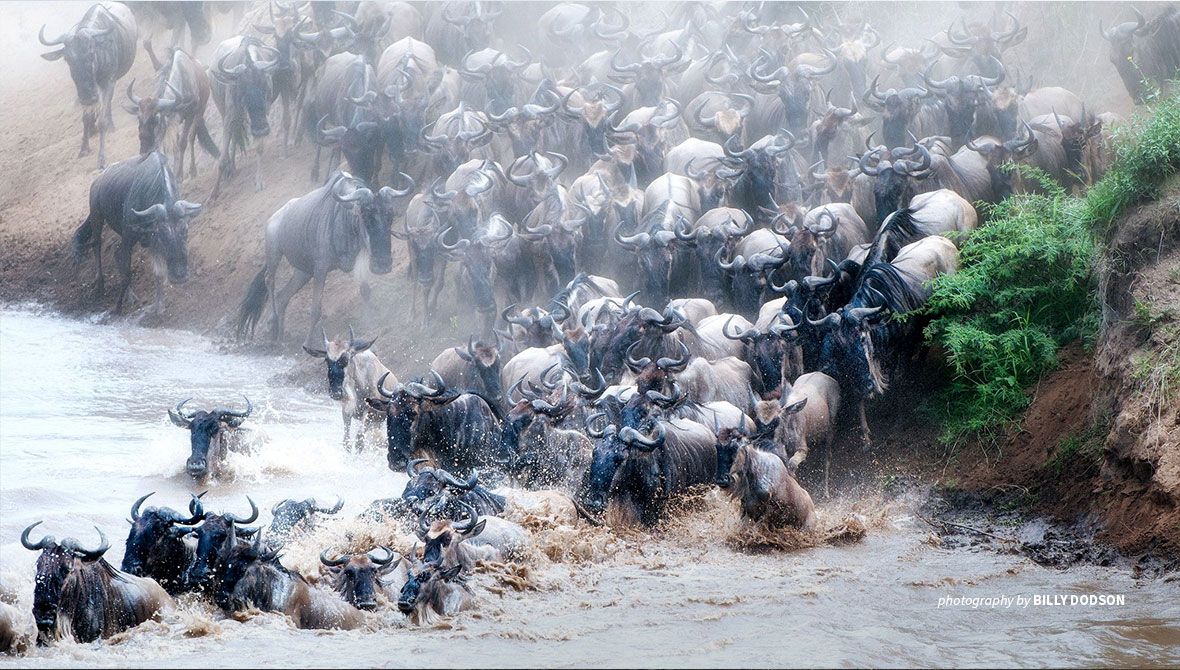
The best time to experience the migration in Kenya is between July and October, when the herds are in the Maasai Mara. However, the exact timing may vary depending on rainfall patterns. Planning a safari during these months offers the highest chance of witnessing the river crossings and massive herds spread across the Mara plains.
The wildebeest migration is not only a tourist attraction but also a critical ecological event. It ensures the regeneration of grasslands, supports predator populations, and maintains the balance of the Serengeti-Mara ecosystem. Conservation efforts by Kenya and Tanzania are vital in protecting migration routes from threats such as human settlement and climate change.
Tourists flock to the Maasai Mara each year to witness the migration. Safari experiences include guided game drives, hot air balloon rides over the plains, and cultural visits to Maasai communities. Lodges and camps range from luxury accommodations to budget-friendly options, allowing travelers to enjoy this phenomenon according to their preferences.
The wildebeest migration in Kenya is more than just a wildlife event—it is a powerful reminder of nature’s cycles and resilience. From the heart-stopping river crossings to the vast herds stretching across the horizon, it remains one of the world’s most remarkable natural spectacles. Visiting Kenya during the migration is an unforgettable experience for any nature or adventure enthusiast.






0 comments