
Your Read is on the Way
Every Story Matters
Every Story Matters
The Hydropower Boom in Africa: A Green Energy Revolution Africa is tapping into its immense hydropower potential, ushering in an era of renewable energy. With monumental projects like Ethiopia’s Grand Ethiopian Renaissance Dam (GERD) and the Inga Dams in the Democratic Republic of Congo, the continent is gearing up to address its energy demands sustainably while driving economic growth.
Northern Kenya is a region rich in resources, cultural diversity, and strategic trade potential, yet it remains underutilized in the national development agenda.
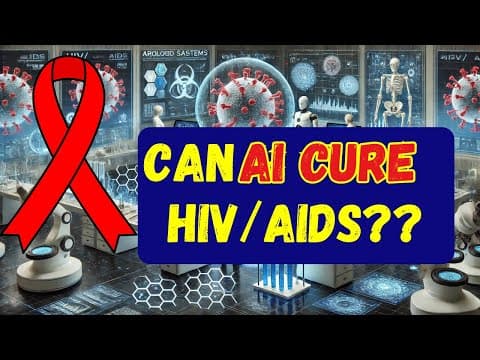
Can AI Help cure HIV AIDS in 2025

Why Ruiru is Almost Dominating Thika in 2025

Mathare Exposed! Discover Mathare-Nairobi through an immersive ground and aerial Tour- HD

Bullet Bras Evolution || Where did Bullet Bras go to?
Academic qualifications were once the gold standard for securing employment, leadership, and societal respect in Kenya. But over the years, this standard has eroded. A disturbing trend has taken root—individuals faking educational credentials to gain access to public office, secure promotions, and accumulate wealth and influence they haven't earned. This quiet epidemic is not only an attack on meritocracy but a deep betrayal of public trust.
In Kenya’s public sector alone, thousands of individuals have been found to be using forged academic papers. Ministries, electoral bodies, county governments, and parastatals have all been affected. The infiltration of unqualified individuals into key institutions raises the uncomfortable question: how many more are hiding behind fake credentials?
Some of the most alarming cases have emerged from high offices. Individuals entrusted with governance, policy-making, and public safety have been exposed as having secured their positions through fake degrees or secondary school certificates. In some instances, these individuals had no formal education past high school, yet rose to powerful roles through manipulation and collusion.
A few forged their way into senior administrative or technical roles, inflating their CVs with fake master's degrees or diplomas. Some even held strategic roles in commissions tasked with upholding the law, drawing millions in taxpayer-funded salaries over years. Their actions not only cheated the system but also jeopardized the performance of institutions critical to Kenya’s development.
Although the law is clear on the consequences of forgery, enforcement has often lagged behind. Where investigations are carried out, and evidence is solid, those caught face serious repercussions.
The outcomes have varied. In some cases, individuals have been arrested and prosecuted, with penalties ranging from jail terms to heavy fines. Courts have also ordered perpetrators to repay every shilling earned fraudulently. Others have had their employment terminated, reputations destroyed, and professional futures completely derailed.
But despite these punitive measures, the damage to public trust is more lasting. The image of politicians and civil servants with fake degrees entrenches a perception that in Kenya, power can be bought or faked—not earned.
When unqualified people occupy leadership positions, the entire system suffers. Policies are poorly formulated, public resources are mismanaged, and decision-making is often uninformed. Moreover, it sends the wrong message: that connections and deception trump integrity and competence.
It also disenfranchises qualified individuals who play by the rules. When people see fraudsters rise through the ranks unchecked, morale dips and confidence in merit-based advancement fades. Over time, institutions lose credibility. The public grows skeptical of officials’ capabilities, and governance outcomes reflect this deficit in professionalism and preparation.
One of the main enablers of certificate fraud is weak verification. Many employers—especially in the public sector—rarely authenticate the documents submitted by applicants. Institutions that do verify are often under pressure to look the other way when powerful names are involved. Political interference, corruption, and a culture of impunity have made it easier for forgers to thrive and avoid accountability.
Fixing this crisis will require more than prosecutions. It demands a cultural transformation—one that restores the value of real education, integrity, and hard work. Government agencies must institute mandatory and independent verification of academic documents during hiring and promotions. Employers should adopt modern systems that can quickly and efficiently validate credentials with issuing institutions.
There should also be a national blacklist of individuals found to have used forged academic papers, barring them from public service indefinitely. Without a public record, many quietly return to government service or shift to new roles, sometimes under new identities.
Finally, institutions of higher learning must tighten their degree issuance processes. The existence of fake degrees points to internal vulnerabilities within universities and examination boards that must be closed with immediate effect.
Forging academic certificates may seem like a shortcut to power or wealth, but it is a time bomb—one that explodes slowly through incompetence, mismanagement, and loss of public trust. Kenya cannot afford a leadership class that does not match its credentials with actual capability. In a country striving for development and global competitiveness, integrity must be non-negotiable.
Until the nation decisively confronts this crisis, Kenya risks being led by people who are only educated on paper, and dangerously uninformed in reality.






1 comment
guest
9mo ago
I agree