
Your Read is on the Way
Every Story Matters
Every Story Matters
The Hydropower Boom in Africa: A Green Energy Revolution Africa is tapping into its immense hydropower potential, ushering in an era of renewable energy. With monumental projects like Ethiopia’s Grand Ethiopian Renaissance Dam (GERD) and the Inga Dams in the Democratic Republic of Congo, the continent is gearing up to address its energy demands sustainably while driving economic growth.
Northern Kenya is a region rich in resources, cultural diversity, and strategic trade potential, yet it remains underutilized in the national development agenda.
Can AI Help cure HIV AIDS in 2025

Why Ruiru is Almost Dominating Thika in 2025

Mathare Exposed! Discover Mathare-Nairobi through an immersive ground and aerial Tour- HD

Bullet Bras Evolution || Where did Bullet Bras go to?
In a groundbreaking medical achievement, doctors at AIIMS hospital in Delhi successfully removed a parasitic twin from a 17-year-old boy, giving him a new chance at life. The teen had spent years carrying an extra set of limbs, a pelvis, and external genitalia attached to his abdomen—a rare condition that had isolated him from society and severely affected his mental well-being. The surgery, led by Dr. Asuri Krishna, was both medically and emotionally transformative, allowing the young man to finally step out of the shadow of his condition.
Parasitic twins occur in fewer than one in 100,000 births and are a result of an undeveloped twin becoming fully dependent on the host twin for survival. Unlike conjoined twins, where both individuals are viable, a parasitic twin lacks vital organs and relies entirely on the host’s body. In this case, the undeveloped twin was unusually well-formed, with two fully developed legs, buttocks, and a pelvis, making it one of the most complex cases ever recorded. Even more astonishing was that these extra limbs could feel pain, touch, and temperature changes, presenting a major challenge for surgeons.
The removal of a parasitic twin is a delicate and risky procedure that requires extensive planning, surgical expertise, and careful post-operative management. Since the parasitic twin often shares blood vessels and nerve connections with the host, separating them without causing damage is extremely difficult. In this case, the medical team performed a two-stage operation, first removing the extra limbs and then extracting a large cystic mass entangled with the boy’s organs. With fewer than 50 documented cases worldwide, the surgeons had little medical precedent to follow, relying instead on their skills and real-time decision-making.
One of the most well-known cases of a parasitic twin was Laloo Ram, an Indian man from the 19th century who had an underdeveloped twin attached to his body. Unlike this recent case in Delhi, Laloo Ram’s parasitic twin was located on his torso, and he was able to travel the world displaying his condition in exhibitions. While his case remains one of the most famous historical examples, modern medicine now offers surgical solutions that can free individuals from such conditions and allow them to live normal lives.
The scientific term for a parasitic twin is "fetus in fetu" or "asymmetrical conjoined twinning." This occurs when one embryo fails to fully separate during early development, leaving one twin underdeveloped and entirely reliant on the other. In some cases, the parasitic twin is found internally inside the host’s body, while in other cases, as seen with the Delhi patient, the twin grows externally, forming visible extra limbs and body structures.
Yes, vestigial twins are real and often mistaken for parasitic twins. However, the two conditions are distinct. Vestigial twins result in extra limbs or body parts that are not connected to the host’s circulatory or nervous system, making them easier to remove. Parasitic twins, on the other hand, often have functional nerve connections and shared blood vessels, making surgery significantly more complex and requiring careful post-operative care to avoid complications.
For the Delhi teenager, the burden of carrying a parasitic twin was more than just physical. His condition led to bullying, social isolation, and deep emotional distress, ultimately forcing him to drop out of school. Unable to participate in everyday activities, he spent years hiding from the outside world. However, with the successful removal of the parasitic twin, he now has a fresh start and hopes to return to school and pursue his dreams. "I hope to study and get a job. A new world has opened up to me," he said in an interview.
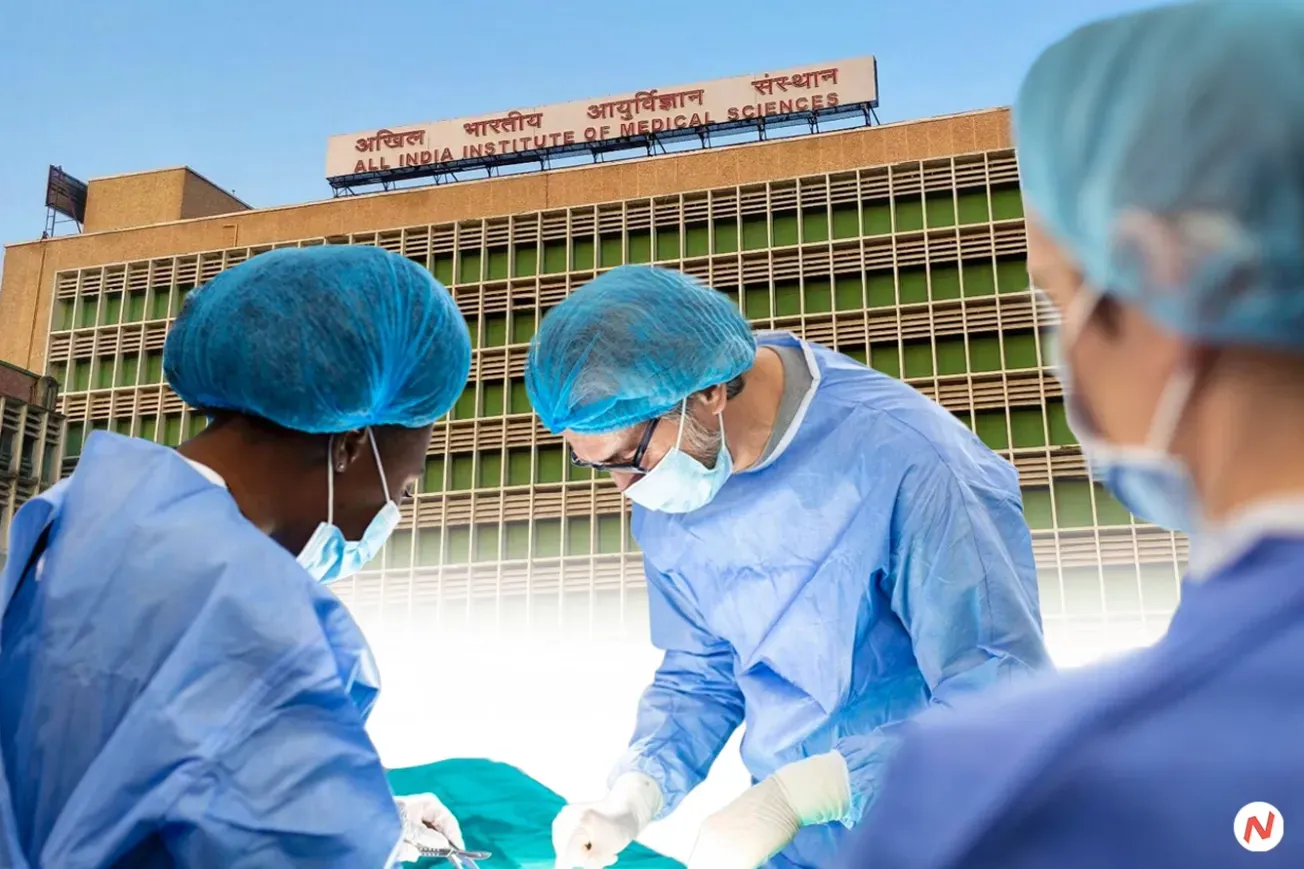
The surgery not only changed his appearance but also restored his confidence. With the extra limbs removed, he can now walk, sit, and move without the burden of an attached twin, allowing him to integrate into society without fear of ridicule. The case highlights the psychological impact of rare medical conditions and how surgical advancements can transform lives beyond just the physical aspect.
This medical breakthrough is a testament to innovation, expertise, and the power of modern surgery. The doctors at AIIMS have set a precedent for handling similar cases in the future, providing hope to those living with rare and complex conditions. Their success reinforces the fact that even the most extraordinary medical challenges can be overcome with the right care and knowledge.
As the teenager begins this new chapter in his life, his story serves as a symbol of resilience and progress. It reminds us that medical science is not just about saving lives—it’s about restoring dignity, hope, and the possibility of a future free from suffering.






0 comments