
Your Read is on the Way
Every Story Matters
Every Story Matters
The Hydropower Boom in Africa: A Green Energy Revolution Africa is tapping into its immense hydropower potential, ushering in an era of renewable energy. With monumental projects like Ethiopia’s Grand Ethiopian Renaissance Dam (GERD) and the Inga Dams in the Democratic Republic of Congo, the continent is gearing up to address its energy demands sustainably while driving economic growth.
Northern Kenya is a region rich in resources, cultural diversity, and strategic trade potential, yet it remains underutilized in the national development agenda.

Can AI Help cure HIV AIDS in 2025

Why Ruiru is Almost Dominating Thika in 2025

Mathare Exposed! Discover Mathare-Nairobi through an immersive ground and aerial Tour- HD

Bullet Bras Evolution || Where did Bullet Bras go to?
In a time when political satire spreads faster than fact, few rumors have captivated the Kenyan online space as much as the one claiming that President William Ruto has four peculiar holes on the back of his head. While there is no official report, confirmed medical record, or clear photographic evidence supporting this claim, the idea has evolved into a meme of mythological proportions.
For some, it’s a hilarious exaggeration, born out of a poorly angled photo or edited video. For others, it’s something deeper — a coded symbol, a secret known to those in power, or a modern-day parable about leadership. What began as a joke has morphed into full-blown commentary, drawing in conspiracy theorists, satirical artists, and ordinary Kenyans all crafting their own versions of the truth.
Let’s unravel the top seven speculative explanations — from the believable to the bizarre.
One of the most grounded — and perhaps the most logical — theories circulating online is that the so-called "holes" might actually be old scars or the aftermath of a childhood surgery. In many African contexts, especially during earlier decades with limited access to specialized care, minor head injuries, untreated infections, or even ritual-based practices could leave behind physical marks.
Scalp injuries, particularly from diseases like meningitis or skin infections like tinea capitis, were common among children growing up in rural areas, and they often left long-term indentations. Add to that the possibility of small, healed lesions or skin conditions — and you could end up with depressions on the skull that, in the right light or camera angle, look like unnatural holes. Still, none of these medical scenarios are confirmed in Ruto’s case, and no one from the presidential office has ever acknowledged such an issue.
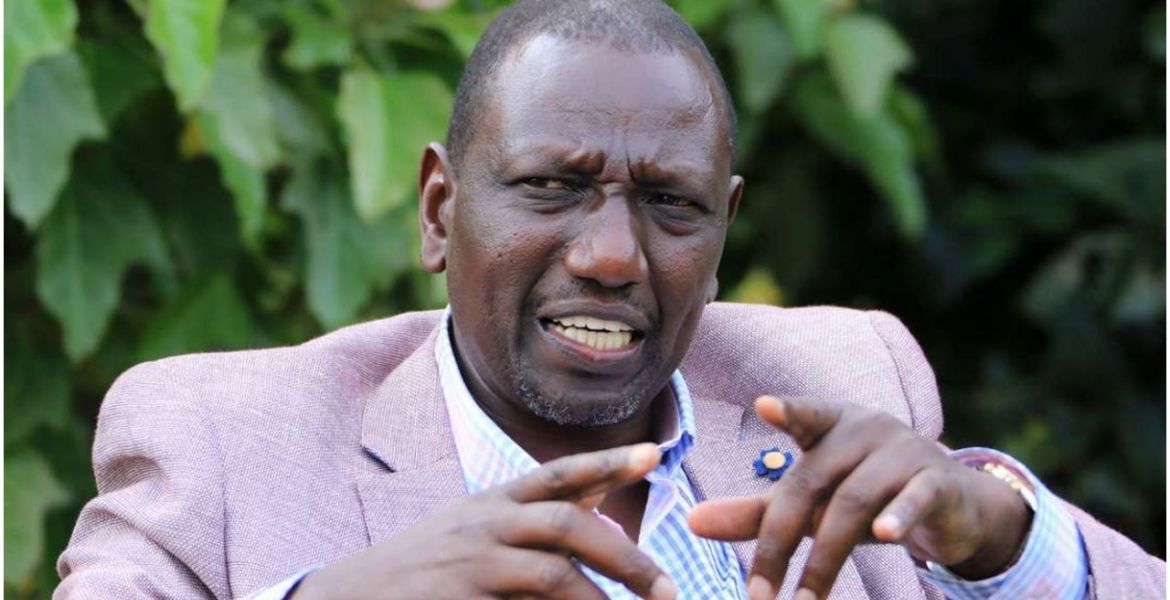
Another widespread theory suggests that the entire conversation is being blown out of proportion by the tricks of lighting, camera resolution, and natural hair growth patterns. When Ruto appears with a closely shaved head — particularly under stage lights or during press briefings — the shadows on his scalp can form visual impressions of circles or pits, especially if the skin is not perfectly smooth.
Human perception is heavily influenced by contrast and shape recognition. What might be ordinary skin texture can appear unusual in photos taken from a distance or zoomed in awkwardly. Given the culture of screenshotting and meme-creation online, it’s easy to see how a normal image can be distorted into something seemingly surreal. If anything, this theory shows how easily the digital lens can twist reality — and how satire often springs from misunderstanding.
Venturing into the mystical, there is a corner of the internet that genuinely believes the marks — real or imagined — are not accidental but rather spiritually significant. In some African traditional beliefs, unusual marks on the body, especially the head, are seen as signs of divine selection, ancestral communication, or spiritual power. Could the four holes be viewed as sacred symbols, perhaps denoting protection or a prophetic destiny?
President Ruto’s deep connection to Christianity and frequent use of spiritual rhetoric have led some to fuse his public image with mystical speculation. Although mainstream religious voices have not weighed in, the belief that certain leaders are marked by forces beyond the physical world continues to shape how people perceive authority. Whether as a joke or as genuine belief, this interpretation adds a mystical flavor to the meme.
This is where the rabbit hole takes a sharp turn into sci-fi absurdity. A growing number of online commentators — especially among younger netizens — have suggested that Ruto might have undergone high-tech enhancements, possibly in the form of implants, sensors, or neural devices. In this theory, the “holes” serve as input ports, data receivers, or even mind control interfaces.
While this might sound ridiculous (and it is), such ideas resonate in an age where people are growing suspicious of political elites, advanced surveillance, and hidden technologies. Elon Musk’s Neuralink has made the concept of brain implants plausible, and conspiracy theorists are eager to apply that logic to anyone in power. Of course, there’s no evidence Ruto has undergone any such procedure — but as a meme, it serves as a satirical metaphor for the techno-elite dystopia many feel is already emerging.
Perhaps the most intelligent interpretation of this theory is that it is entirely metaphorical. The “four holes” aren’t physical but symbolic — representing gaps in leadership, accountability, or vision. It could be a digital protest in disguise, a way for frustrated citizens to mock what they perceive as mental or moral blind spots in the president’s policies.
This satirical lens reflects a long-standing African tradition of using humor to critique power. In countries where open dissent can sometimes attract consequences, turning criticism into comedy — or memes — is a safer, more viral way to express dissatisfaction. Here, Ruto’s head becomes a canvas onto which people project their grievances, shaped as humor but edged with truth.
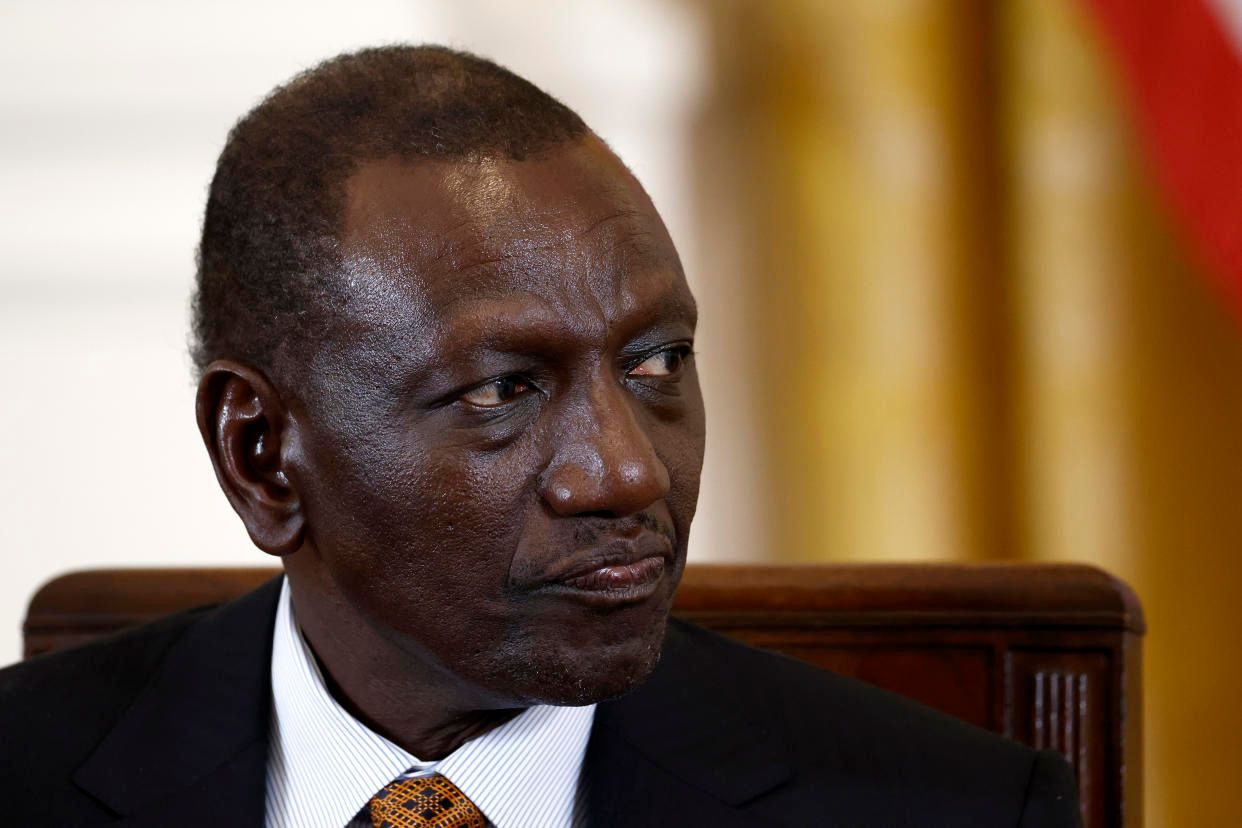
Digging through archives of older tweets and meme folders, some internet detectives have traced the origins of the “four holes” theory to what appears to be a doctored photo or low-quality video clip. It’s possible that a single, poorly edited or heavily compressed image circulated during Ruto’s campaign season, gained traction, and mutated into legend.
Once a visual is taken out of context — especially in the meme economy — it becomes impossible to control. The image is re-edited, exaggerated, repurposed for every possible interpretation. As with many viral conspiracies, the truth gets buried under layers of joke captions, emojis, and remix culture. The hoax itself becomes part of national digital folklore.
At its core, the “four holes” myth is not about biology — it’s about the way Kenyans process power in the internet age. Satire is not just a coping mechanism; it’s a tool for resistance, storytelling, and collective commentary. The meme isn’t merely absurd. It’s effective. It gets people talking, questioning, laughing, and, perhaps most importantly, participating in political discourse in a language that feels their own.
What we see here is a collision between digital literacy, cultural humor, and political frustration. The meme becomes an open canvas: some use it to joke, others to critique, others to mythologize. It’s democratic in nature — it invites remix, interpretation, and rejection.
So, does President William Ruto have four holes in the back of his head?
Highly unlikely.
But that’s beside the point. Whether real, exaggerated, or entirely fictional, the rumor has become a mirror for modern Kenya — a society grappling with power, transparency, faith, and technology, all while staying sharply humorous.
The “four holes” are not about medical facts. They’re about symbolism, resistance, and digital mythology — a reminder that in today’s world, politics isn’t just practiced. It’s memed.
And sometimes, what’s funny today becomes tomorrow’s folklore.






0 comments