
Your Read is on the Way
Every Story Matters
Every Story Matters
The Hydropower Boom in Africa: A Green Energy Revolution Africa is tapping into its immense hydropower potential, ushering in an era of renewable energy. With monumental projects like Ethiopia’s Grand Ethiopian Renaissance Dam (GERD) and the Inga Dams in the Democratic Republic of Congo, the continent is gearing up to address its energy demands sustainably while driving economic growth.
Northern Kenya is a region rich in resources, cultural diversity, and strategic trade potential, yet it remains underutilized in the national development agenda.
Can AI Help cure HIV AIDS in 2025

Why Ruiru is Almost Dominating Thika in 2025
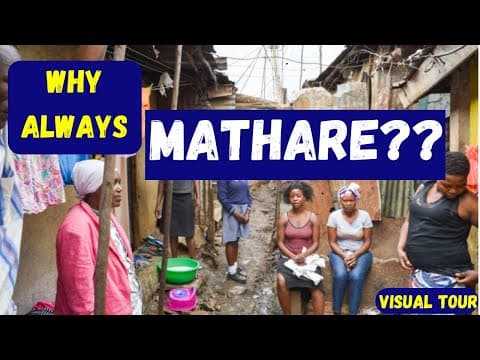
Mathare Exposed! Discover Mathare-Nairobi through an immersive ground and aerial Tour- HD

Bullet Bras Evolution || Where did Bullet Bras go to?
In the rural landscape of Nangoma village in Matayos constituency, Busia County, a woman named Judith Nafula has sent shockwaves through her community by proclaiming herself as the biblical Mary, mother of Jesus. According to Nafula, her identity was revealed to her through a powerful divine experience—one that would change her life and those around her.
She describes a vivid moment when a bright light beamed down from the sky and a voice, which she believes to be that of Jesus, spoke directly to her. The voice asked where Mary was, and then affirmed that she herself was the mother of Christ. Nafula says this moment redefined her purpose and gave her a spiritual mission: to let the world know of Jesus’s presence and her own role in that divine order.
Judith Nafula’s revelations didn’t end with her. Her husband, John Wekulo, initially dismissed her claims. However, after his own spiritual encounter, he began to believe he was the reincarnation of Joseph, Mary's husband from the Bible. Their family, once ordinary, has now become a center of spiritual discussions, attracting both skeptics and believers.
For weeks, Nafula secluded herself on a hill, praying and fasting. She says she communicated directly with heavenly powers and received instructions on her next steps. Her home has since become a spiritual site for some locals who believe she can intercede with divine powers.
Nafula’s growing popularity quickly drew the attention of religious institutions. The local Catholic Church, where she was previously a member, expelled her for what they described as blasphemy and unorthodox teachings. Church officials were particularly disturbed by her claims of performing miracles, which they viewed as misleading and disruptive to the faith.

Despite the church’s stance, Nafula’s following has only grown. Villagers now come to her home seeking healing and spiritual guidance. Some report strange experiences, healings, or dreams after visiting her. Her claims, though controversial, have built a wave of belief among those desperate for answers beyond traditional religion.
Opinions remain sharply divided. To her supporters, Judith Nafula is a messenger sent by the heavens, a sign of deeper spiritual truths that institutions are too rigid to accept. To others, she’s either mentally disturbed or driven by personal motives to manipulate vulnerable believers.
There are whispers that she has healed the sick, predicted personal events, and offered insight that no one else could have known. Yet, without formal religious backing or scientific validation, her powers remain in the realm of belief.
Judith Nafula is not the only one claiming divine identity in this region. Other individuals in nearby counties have made similar proclamations—each one stirring communities and challenging the boundaries between personal faith and organized religion.
What sets Nafula apart is the blend of boldness and humility with which she delivers her message. She’s not asking for money. She doesn’t preach sermons. She simply tells her story, says her truth, and invites those who believe to walk with her.
Whether Judith Nafula is truly a spiritual figure or a symbol of religious unrest in society, her story is more than a spectacle. It reflects the complex hunger for meaning, identity, and power in the realm of faith. In a world where institutional religion sometimes fails to connect, figures like Nafula fill a void—controversial, powerful, and deeply human.






0 comments