
Your Read is on the Way
Every Story Matters
Every Story Matters
The Hydropower Boom in Africa: A Green Energy Revolution Africa is tapping into its immense hydropower potential, ushering in an era of renewable energy. With monumental projects like Ethiopia’s Grand Ethiopian Renaissance Dam (GERD) and the Inga Dams in the Democratic Republic of Congo, the continent is gearing up to address its energy demands sustainably while driving economic growth.
Northern Kenya is a region rich in resources, cultural diversity, and strategic trade potential, yet it remains underutilized in the national development agenda.

Can AI Help cure HIV AIDS in 2025

Why Ruiru is Almost Dominating Thika in 2025

Mathare Exposed! Discover Mathare-Nairobi through an immersive ground and aerial Tour- HD

Bullet Bras Evolution || Where did Bullet Bras go to?
The choice to wear the hijab and long dresses by Muslim women is far more than a cultural artifact or social obligation. It stems from deeply rooted Islamic teachings that emphasize modesty, humility, and moral conduct in all aspects of life—especially in appearance and behavior. Modesty, known as haya in Arabic, is a core value in Islam and is encouraged for both men and women.
The Qur'an outlines general principles of modesty and instructs believing women to guard their dignity by covering their bodies, which has been widely interpreted through the centuries to include the wearing of headscarves (hijabs) and loose-fitting clothing. For many Muslim women, adhering to these guidelines is not a burden, but a conscious, spiritual act of devotion and obedience to God.
To many Muslim women, the hijab is not merely a fabric over the head—it is a public expression of faith and personal integrity. It allows them to engage with the world while asserting control over how their bodies are perceived. In environments where appearance often dictates worth, the hijab can function as a powerful shield against objectification.
Furthermore, for Muslim women living in non-Muslim societies, wearing the hijab can also be an assertion of identity in multicultural contexts. It sends a message of rootedness, confidence, and resistance to assimilation pressures. In this way, modest clothing becomes both a religious and political statement—a way to reclaim narrative in societies where Muslim women are often misunderstood.
Contrary to common stereotypes, many Muslim women describe the hijab as liberating rather than oppressive. The act of choosing to wear it—whether at puberty or later in life—is often empowering. For them, it means refusing to conform to beauty standards that define worth through exposure or appearance.
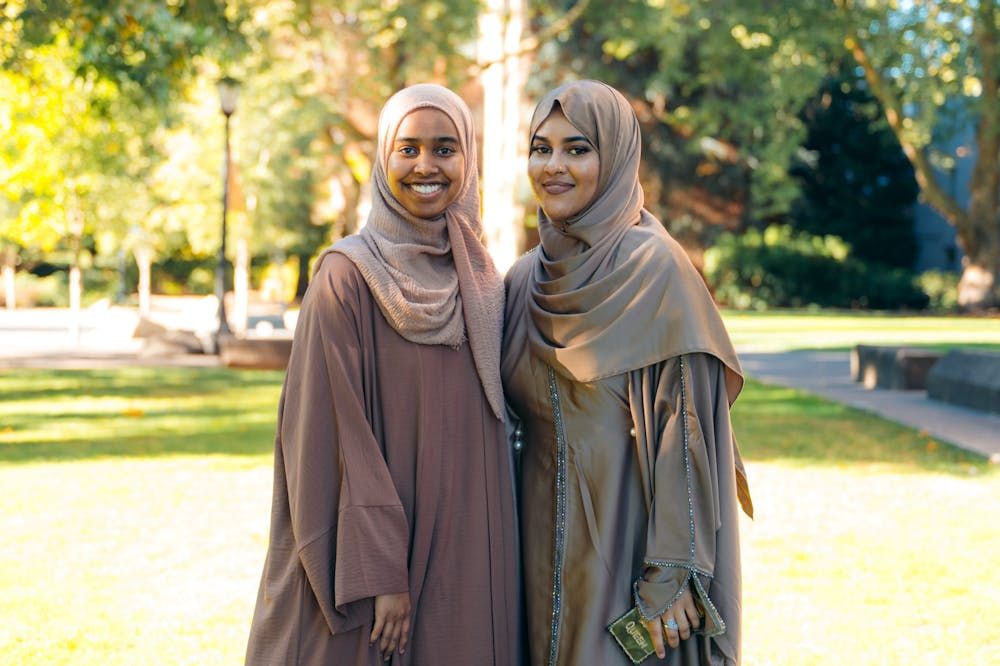
Countless women articulate their hijab as a symbol of discipline, self-respect, and moral clarity. It's a decision made in private reflection, often with a deep emotional and spiritual connection. While some may face societal pressure to conform to certain standards, the hijab, when chosen freely, becomes a powerful emblem of self-determination.
Western discourse often portrays veiled women as silenced, submissive, or controlled. These generalizations fail to recognize the complex diversity of Muslim women’s experiences and the vast spectrum of reasons they choose to dress modestly. Hijab-wearing women are scholars, artists, athletes, activists, and leaders—far from voiceless or invisible.
In reality, many women actively resist being told by others—whether governments, media, or communities—what they should or should not wear. The debate over hijab bans in some countries is a reminder that control over women's clothing is not limited to religious communities. True empowerment lies in giving women the freedom to choose for themselves, without coercion or judgment.
Islamic modest dress is not monolithic. Across regions, cultures, and communities, interpretations vary widely. In some places, modesty is expressed through colorful cultural garments like the abaya, jilbab, or shalwar kameez. Others may wear only a simple scarf. What unites all these expressions is a shared intention to dress with dignity, in accordance with one’s understanding of faith.
Today's younger Muslim women are also redefining modest fashion. The global rise of modest fashion influencers, designers, and entrepreneurs reflects a growing desire to combine modern aesthetics with Islamic principles, showing that faith and fashion can coexist harmoniously.






0 comments