
Your Read is on the Way
Every Story Matters
Every Story Matters
The Hydropower Boom in Africa: A Green Energy Revolution Africa is tapping into its immense hydropower potential, ushering in an era of renewable energy. With monumental projects like Ethiopia’s Grand Ethiopian Renaissance Dam (GERD) and the Inga Dams in the Democratic Republic of Congo, the continent is gearing up to address its energy demands sustainably while driving economic growth.
Northern Kenya is a region rich in resources, cultural diversity, and strategic trade potential, yet it remains underutilized in the national development agenda.

Can AI Help cure HIV AIDS in 2025

Why Ruiru is Almost Dominating Thika in 2025

Mathare Exposed! Discover Mathare-Nairobi through an immersive ground and aerial Tour- HD

Bullet Bras Evolution || Where did Bullet Bras go to?
March 14 was supposed to be a day of joy, togetherness, and vibrant hues filling the streets of India. From bustling city squares to small village roads, the entire country was preparing to immerse itself in a festival of colours. Holi, after all, was more than just a celebration; it was a symbol of unity, breaking barriers of caste, class, and status. But this year, something unimaginable happened.
As the first rays of sunlight touched the ground, people stepped out of their homes, expecting a riot of colours. Instead, an eerie realization swept across the nation—every trace of colour had vanished. The bright reds, yellows, and greens of Holi powders were gone. The saris, the murals on temple walls, the decorations in marketplaces—everything had turned into muted shades of gray. Even television screens, mobile phones, and digital advertisements displayed nothing but black and white.
Panic set in instantly. Social media exploded with confusion. People posted images of their surroundings, all showing the same bleak, colourless reality. Some thought it was a prank, a coordinated stunt to make Holi different this year. But as minutes turned into hours, fear replaced curiosity. The phenomenon was not isolated; it had spread across the entire country.
The festival that was meant to be the most visually spectacular event of the year had been reduced to a monochrome nightmare.
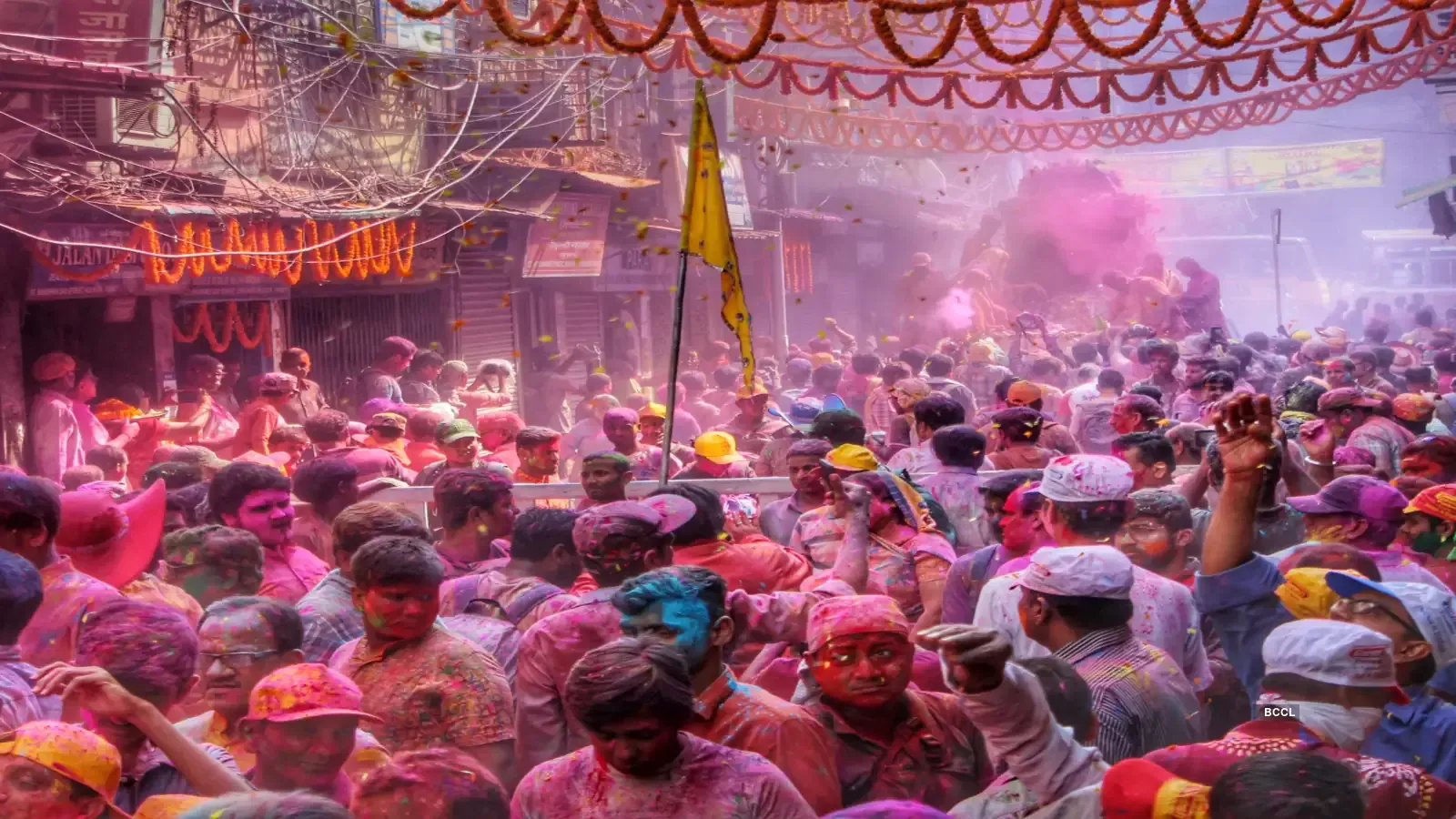
As news channels reported on the crisis, experts and government officials scrambled for answers. Initially, meteorologists suggested that a rare atmospheric event might have caused a visual distortion, but this theory collapsed when chemical tests revealed that dyes, paints, and even naturally pigmented materials had lost their colour at a molecular level.
This was no illusion.
Religious leaders called for prayers, claiming it was divine intervention—a warning against modern excesses, urging people to return to the roots of Holi. Conspiracy theorists, on the other hand, had a different explanation. They believed that it was an act of bio-terrorism, a government experiment gone wrong, or even an alien invasion.
Meanwhile, the government declared a nationwide emergency, urging citizens to stay indoors until scientists could determine whether the phenomenon posed any health risks. Schools, offices, and markets remained closed, but this time, not because of a scheduled holiday. Liquor stores, which were supposed to shut down for Holi, now remained closed for an entirely different reason—fear of mass hysteria.
With no explanation, the streets remained empty, and Holi, for the first time in centuries, was not celebrated.

The breakthrough came when a team of scientists from the Indian Institute of Science traced the phenomenon to a research lab operating under classified conditions. A group of researchers had been working on a revolutionary form of nanotechnology designed to create "self-cleaning" urban environments. Their goal was to develop microscopic particles that could neutralize pollutants and stains at a molecular level. However, a single miscalculation had triggered a catastrophic chain reaction.
Instead of targeting pollutants, the nanotechnology had begun neutralizing pigments of all kinds. In an instant, the fundamental nature of colour itself had been erased from India’s landscape.
The worst part? There was no immediate solution.
The scientists confessed that reversing the effect could take months, even years. India, the land known for its vibrant festivals, was now trapped in a colourless limbo.
At first, despair took over. The absence of colour felt like the loss of identity, history, and culture. But then, something extraordinary happened. Instead of surrendering to the crisis, communities across India came together in an unprecedented way.
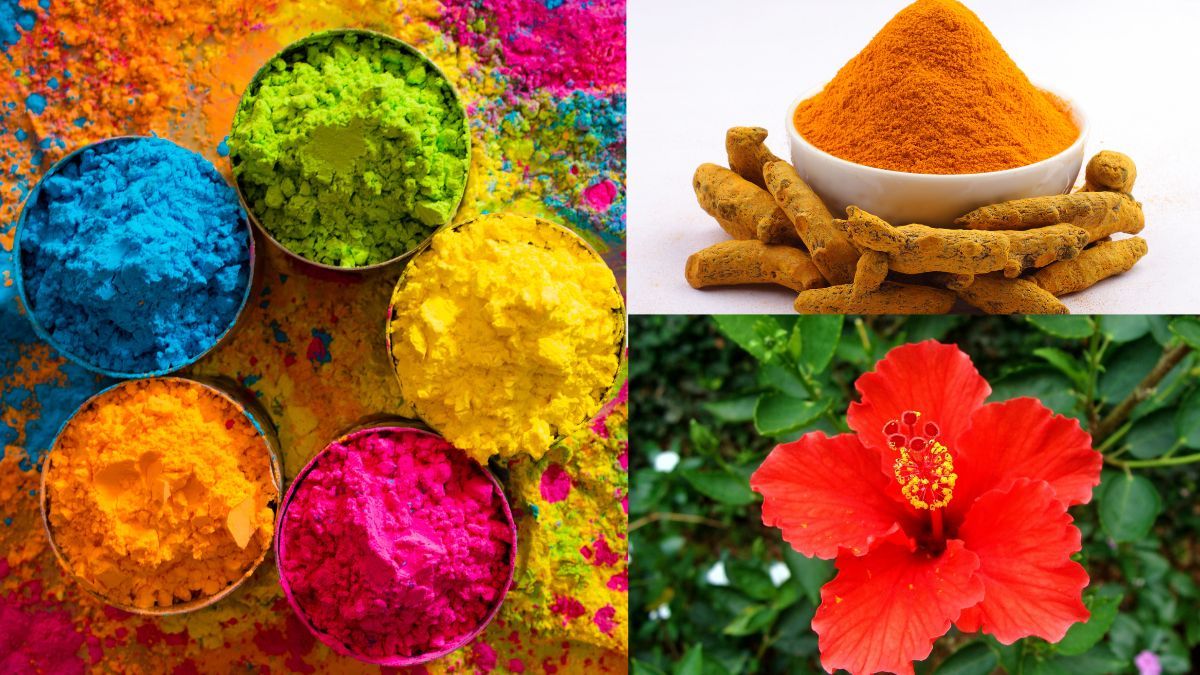
People adapted. Artists and cultural leaders began experimenting with natural elements to bring back Holi in a new way. Instead of throwing synthetic gulal, people used flower petals. Turmeric and beetroot extracts replaced chemical dyes. Instead of bright powders, people smeared one another with clay and natural pigments.
Musicians and dancers, usually drowned out by the excitement of colour fights, became the new heart of the festival. People turned to storytelling, recalling legends of Holi that had long been overshadowed by commercialization.
A month later, colour gradually returned. The nanotechnology’s effect began to fade, and scientists, working round the clock, managed to accelerate the recovery. Slowly, Holi powders regained their brightness, fabrics regained their dyes, and nature’s colours reappeared.
The experience left a deep impact. Holi was no longer just about splashing colours—it became a symbol of resilience, a reminder that the spirit of the festival was never in its pigments, but in the unity and joy it inspired.






0 comments