
Your Read is on the Way
Every Story Matters
Every Story Matters
The Hydropower Boom in Africa: A Green Energy Revolution Africa is tapping into its immense hydropower potential, ushering in an era of renewable energy. With monumental projects like Ethiopia’s Grand Ethiopian Renaissance Dam (GERD) and the Inga Dams in the Democratic Republic of Congo, the continent is gearing up to address its energy demands sustainably while driving economic growth.
Northern Kenya is a region rich in resources, cultural diversity, and strategic trade potential, yet it remains underutilized in the national development agenda.

Can AI Help cure HIV AIDS in 2025

Why Ruiru is Almost Dominating Thika in 2025

Mathare Exposed! Discover Mathare-Nairobi through an immersive ground and aerial Tour- HD

Bullet Bras Evolution || Where did Bullet Bras go to?
Dowry isn’t simply the exchange of cattle, money, or gifts—it’s a bold declaration of commitment. It’s the moment one family formally says, “We’re here, and we’re serious.” It marks the official crossing from courtship into an alliance built on mutual respect. The dowry, in essence, is a public handshake between clans. Without it, many African, Asian, and Middle Eastern communities consider the union incomplete or lacking integrity.
It doesn't matter how modern a couple is—if the dowry is skipped or downplayed, the relationship often loses recognition in the eyes of the elders. This isn’t about materialism; it’s about honoring tradition and proving one’s readiness to carry the weight of marriage.
The modern mind might scoff at dowry as a transactional affair, but it’s far more symbolic than economic. A proper dowry presentation isn’t about buying a bride—it’s about showing that the groom and his family value the bride enough to offer something meaningful in return.
It also reassures the bride’s family: “She’s not going into a reckless household.” That cow, those goats, that envelope—each item carries weight, history, and message. It’s a tribute to the parents who raised her, and an announcement that the groom understands what she’s worth—emotionally, socially, and culturally.
Beyond the personal, dowry is a powerful social statement. It signals to the extended community that the union has passed the threshold of acceptability. The public nature of dowry presentations serves as a binding ceremony, witnessed and often endorsed by family, elders, and society at large.
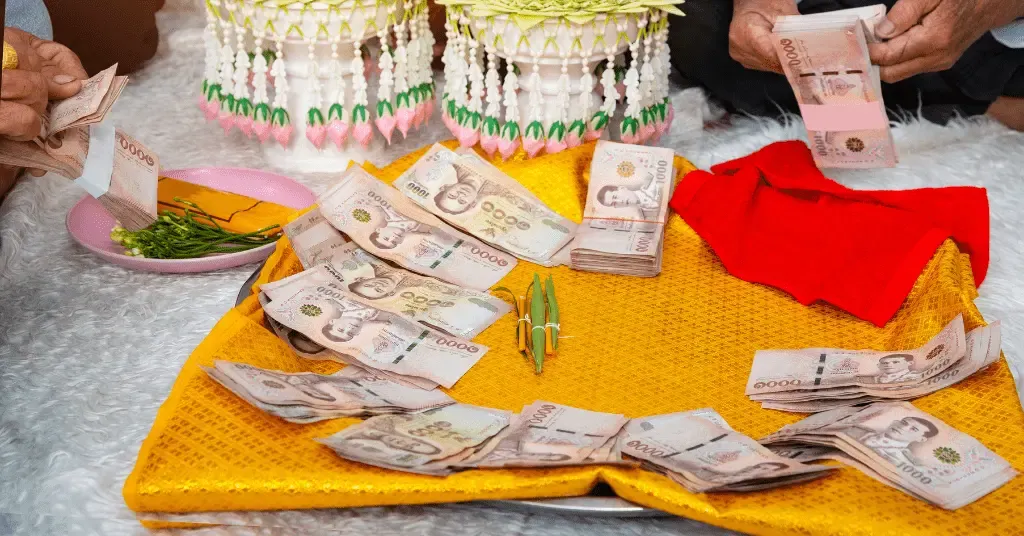
It also sets the tone for how families will relate. In-laws who are respected during dowry negotiations usually remain respected throughout the marriage. Those who are dismissed or insulted? Tensions often carry forward into the relationship. Dowry is, therefore, the starting point of diplomacy between households.
In traditional communities, dowry is intertwined with gender roles. For the groom, it is a rite of passage—his first real demonstration of responsibility. For the bride, it’s a moment of valuation and pride. While these roles are being challenged today, the underlying structure still plays out in modern ceremonies. Men are expected to give, and women are expected to be given.
However, modern reinterpretations of dowry are emerging, with some couples choosing to exchange gifts equally or frame the presentation as a celebration rather than a requirement. The core remains: some gesture must mark the gravity of the union.
Dowry isn’t vanishing—it’s adapting. Today’s ceremonies might include SUVs instead of cows, or gold bracelets instead of grain. But the essence is untouched: respect, commitment, tradition. Even when young couples choose civil weddings or elopements, many eventually return to fulfill dowry expectations, either for peace with their families or to legitimize the marriage within their culture.
That’s because dowry holds something modern love often lacks—structure and social weight. It’s not just two people choosing each other; it’s two families aligning their futures, traditions, and expectations in a structured, respected ritual.
If you strip away the gifts and the ceremony, dowry is about one thing: accountability. It forces couples to consider the weight of marriage before they dive in. It forces families to come to the table—literally and figuratively—and build something together.
In a world where marriages are easily entered and quickly abandoned, dowry remains a moment of seriousness, clarity, and shared responsibility. Whether traditional or modern, expensive or modest, dowry matters because it makes marriage matter.






0 comments