
Your Read is on the Way
Every Story Matters
Every Story Matters
The Hydropower Boom in Africa: A Green Energy Revolution Africa is tapping into its immense hydropower potential, ushering in an era of renewable energy. With monumental projects like Ethiopia’s Grand Ethiopian Renaissance Dam (GERD) and the Inga Dams in the Democratic Republic of Congo, the continent is gearing up to address its energy demands sustainably while driving economic growth.
Northern Kenya is a region rich in resources, cultural diversity, and strategic trade potential, yet it remains underutilized in the national development agenda.

Can AI Help cure HIV AIDS in 2025

Why Ruiru is Almost Dominating Thika in 2025

Mathare Exposed! Discover Mathare-Nairobi through an immersive ground and aerial Tour- HD

Bullet Bras Evolution || Where did Bullet Bras go to?
In Islam, the human body is treated with great respect both in life and after death. One of the most defining features of Muslim burial is its urgency. Muslims are generally buried as soon as possible, often within 24 hours of death. This is based on the Prophet Muhammad’s teachings which emphasize swift burial to honor the dead and begin their journey to the afterlife.
Delays are only permitted for necessary reasons—such as waiting for close relatives or transportation of the body—but embalming and autopsies are usually discouraged unless required by law.
Before burial, the body undergoes a ritual purification process called Ghusl. This involves washing the deceased with clean, scented water, traditionally by close family members of the same gender, or trained individuals from the Muslim community.
The body is washed an odd number of times (usually three), beginning with the right side and using water mixed with camphor or lotus leaves if available. The purpose is both physical cleanliness and spiritual preparation.
After washing, the body is shrouded in white cloth (kafan). Men are wrapped in three white sheets, while women typically are wrapped in five pieces. This simple cloth reflects the Islamic emphasis on equality and humility before God—no matter one's status in life.
Following Ghusl and shrouding, the community gathers to perform the Janazah prayer, a collective funeral prayer meant to honor the deceased and seek mercy for them. It is usually performed in a mosque or open area and consists of four Takbirs (glorifications of God), silent prayers, and no bowing or prostration.
There are no musical instruments, elaborate ceremonies, or eulogies in traditional Muslim funerals. The focus is entirely on supplication, humility, and reminding the living of their own mortality.
Offering Janazah is considered a communal obligation (Fard Kifayah), meaning if a few perform it, the duty is fulfilled for all. But if no one does, the entire community bears the sin.
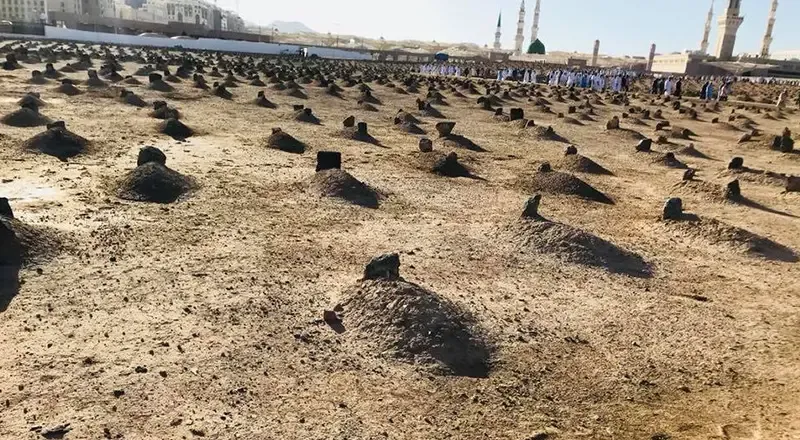
The body is taken to the graveyard for burial immediately after prayers. In Islamic tradition, the body is placed directly in the ground (without a coffin where permitted), lying on its right side, facing the Qibla—the direction of Mecca.
Read this related article: Why Muslims Are Buried the Same Day: Religious Duty, Dignity, and Divine Order
At the gravesite, additional prayers may be recited, but rituals remain modest. There is no requirement for ornate headstones or grave decorations. Simplicity symbolizes a return to the earth and submission to God’s will.
Throwing three handfuls of soil into the grave is a symbolic gesture by mourners. The grave is then closed, often without mechanical tools, and mourners may read short supplications.
Islam encourages moderation in mourning. Excessive weeping, loud wailing, or ritualized displays of grief are discouraged. The mourning period usually lasts three days, though a widow traditionally observes a four-month and ten-day period (iddah), during which she remains mostly at home and avoids adornment.
Charitable acts, Qur'an recitation, and prayer are encouraged as ways of honoring the dead. Visiting graves is also permissible, particularly on Fridays or religious holidays, as a way to reflect on mortality and pray for loved ones.
Islam also teaches that death is not the end—it is the beginning of the soul’s next journey. Thus, burial is not just a closure, but a rite of passage into the eternal realm.
While the basic practices are grounded in universal Islamic teachings, cultural variations exist. In some regions, additional supplications, communal meals, or Quranic recitations may accompany the burial. However, scholars often emphasize keeping burial practices close to the Prophet’s tradition and avoiding innovations.
Muslim burial traditions are deeply structured, symbolic, and spiritually meaningful. They aim to honor the deceased, comfort the living, and underscore the core Islamic values of humility, equality, and submission to God. Through every stage—from washing to burial—there is a consistent reminder that life is temporary and the hereafter eternal.






0 comments