
Your Read is on the Way
Every Story Matters
Every Story Matters
The Hydropower Boom in Africa: A Green Energy Revolution Africa is tapping into its immense hydropower potential, ushering in an era of renewable energy. With monumental projects like Ethiopia’s Grand Ethiopian Renaissance Dam (GERD) and the Inga Dams in the Democratic Republic of Congo, the continent is gearing up to address its energy demands sustainably while driving economic growth.
Northern Kenya is a region rich in resources, cultural diversity, and strategic trade potential, yet it remains underutilized in the national development agenda.

Can AI Help cure HIV AIDS in 2025

Why Ruiru is Almost Dominating Thika in 2025

Mathare Exposed! Discover Mathare-Nairobi through an immersive ground and aerial Tour- HD

Bullet Bras Evolution || Where did Bullet Bras go to?
Popular Kenyan content creator, former radio host, and comedian Oga Obinna has found himself at the heart of a heated debate after publicly airing his frustrations with Kenyan churches. His grievance? No church was willing to grant him access to shoot a gospel music video. Obinna, who has made a name for himself through comedy, media hosting, and YouTube content creation, recently collaborated with Wapendwa Muziki for a new gospel song, Hakuna Wa Kufanana. Given the deeply spiritual nature of the track, he sought to film the accompanying music video inside a church—what he considered the most appropriate and symbolic setting. However, to his dismay, multiple churches turned him down, leaving him both bewildered and enraged.
Unwilling to suffer in silence, Obinna took to TikTok, where he vented his frustrations in a fiery rant. In his video, he accused religious institutions of being hypocritical, questioning how churches could claim to spread the gospel yet deny artists like him the opportunity to create content that glorifies God. His impassioned speech quickly caught fire online, with thousands weighing in on the matter.
"I am boiling with anger right now," he fumed. "I am looking for a location to shoot my music video. The concept of the video requires a church, but no one wants to allow us in. I have visited several churches, my director has tried as well, yet all we hear is ‘no.’ And this is exactly why I don’t go to church—because of pretenders."
The outspoken entertainer did not hold back as he expressed his disappointment, painting a picture of religious establishments that he believes are more focused on rules and restrictions than on spreading the gospel.
For those unfamiliar with his background, Oga Obinna is a well-known Kenyan media personality with a diverse portfolio in comedy, entertainment, and radio hosting. He gained national fame through his humorous content and controversial takes on societal issues. He has worked with various radio stations, including Kiss 100, where he was a morning show host before parting ways with the station. Beyond entertainment, Obinna has also ventured into music, content creation, and business, cementing his status as one of Kenya’s most versatile entertainers.
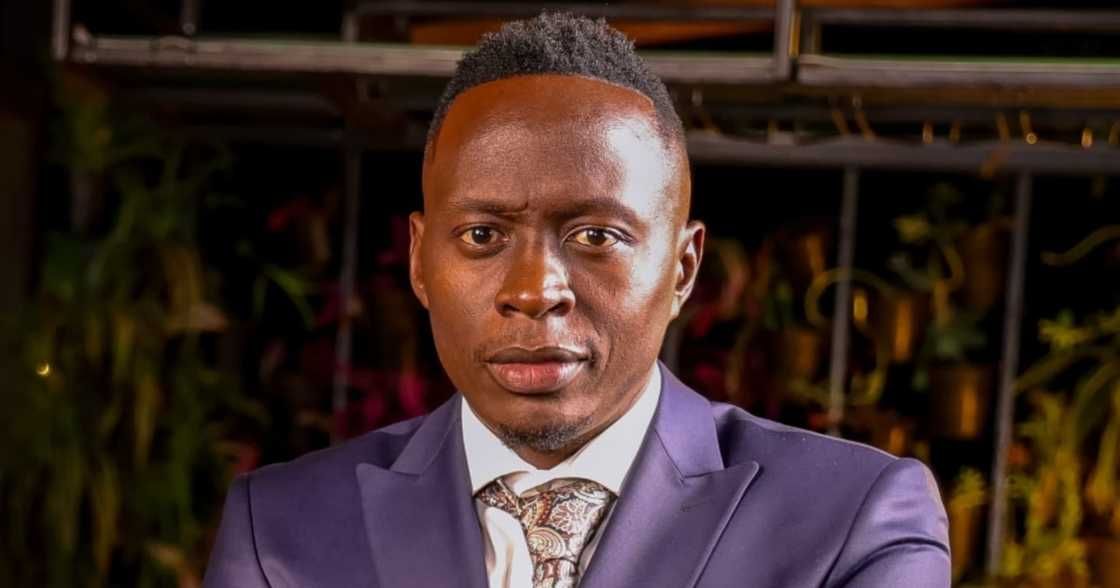
Despite his often comedic approach, Obinna has never shied away from addressing serious issues, making him a polarizing figure in the industry. His outburst against churches is just the latest in a string of controversial moments that have kept him in the spotlight.
As expected, his rant ignited strong reactions on social media, with netizens split on whether his grievances were justified. While some sympathized with his plight, others dismissed his complaints, arguing that churches have the right to regulate the use of their spaces.
"Why not shoot in your own church? Or does your church also reject people?" one social media user asked, hinting at the possibility that Obinna’s own congregation might have denied him access.
Others pointed out that places of worship are not just public venues and that many churches have strict policies against commercial productions or entertainment-related activities.
On the other hand, some users supported Obinna’s argument, stating that churches should be more open to gospel artists seeking to spread messages of faith. According to them, if churches truly want to support gospel music, they should collaborate with musicians rather than shutting them out.
The controversy raises a broader question: Should churches make their spaces available to gospel musicians, or do they have the right to maintain their strict policies? Some argue that collaborations between artists and religious institutions could help promote faith-based messages to a wider audience. They believe that restricting access to musicians willing to spread God’s word through music contradicts the core mission of the church.

However, others insist that churches are not obligated to accommodate every request that comes their way. They argue that many churches have faced past incidents where commercial productions disrupted worship services or disrespected the sanctity of the space.
Obinna’s ability to spark discussions is nothing new. Throughout his career, he has been vocal about issues he believes need addressing. His transition from comedy to mainstream media, music, and content creation has made him a household name in Kenya. His online presence, particularly on platforms like TikTok and YouTube, allows him to reach a broad audience, amplifying his views and ensuring that conversations around his statements are widespread.
His clash with the church establishment follows his long-standing reputation for challenging societal norms and calling out what he perceives as hypocrisy in different sectors. Whether in entertainment, religion, or politics, Obinna has consistently used his platform to question and critique systems that he believes are failing people.
While the debate rages on, it remains to be seen whether Kenyan churches will reconsider their stance on allowing gospel musicians to use their venues. Will they relax their policies to accommodate artists with positive messages, or will they continue to maintain strict control over who can use their spaces?
As for Obinna, his frustration with churches does not seem to be fading anytime soon. He remains vocal about his disappointment, and given his influence, the conversation is unlikely to die down quickly. Regardless of where one stands on the issue, the debate highlights the ongoing struggle between tradition and modernity within religious institutions.
For now, gospel musicians may have to find alternative locations for their music videos. Whether churches will change their policies or remain steadfast in their rules is a question that only time will answer.






0 comments