
Your Read is on the Way
Every Story Matters
Every Story Matters
The Hydropower Boom in Africa: A Green Energy Revolution Africa is tapping into its immense hydropower potential, ushering in an era of renewable energy. With monumental projects like Ethiopia’s Grand Ethiopian Renaissance Dam (GERD) and the Inga Dams in the Democratic Republic of Congo, the continent is gearing up to address its energy demands sustainably while driving economic growth.
Northern Kenya is a region rich in resources, cultural diversity, and strategic trade potential, yet it remains underutilized in the national development agenda.

Can AI Help cure HIV AIDS in 2025

Why Ruiru is Almost Dominating Thika in 2025

Mathare Exposed! Discover Mathare-Nairobi through an immersive ground and aerial Tour- HD

Bullet Bras Evolution || Where did Bullet Bras go to?
Marriage in Islam is not just a social contract—it’s a sacred covenant rooted in spiritual purpose. Known as Nikah, the Islamic marriage is both a solemn legal agreement and a religiously significant act that reflects the will of Allah.
The process emphasizes mutual consent, clarity, and the intention to build a God-centered life together. Before any celebrations or gatherings, the focus is placed on religious grounding, family involvement, and legal transparency.
A fundamental principle of an Islamic marriage is Ijab (proposal) and Qubul (acceptance). Both the bride and the groom must give free and willing consent, often declared in front of witnesses.
The bride is given the right to accept or reject any proposal—no Islamic marriage is valid without her agreement. Once consent is affirmed, families meet and preparations begin, including discussions about the mahr (mandatory gift from the groom to the bride).
The core ritual is the Nikah itself, usually conducted by an imam, qadi (Islamic judge), or a trusted religious figure. The ceremony is often held in a mosque, home, or wedding hall.
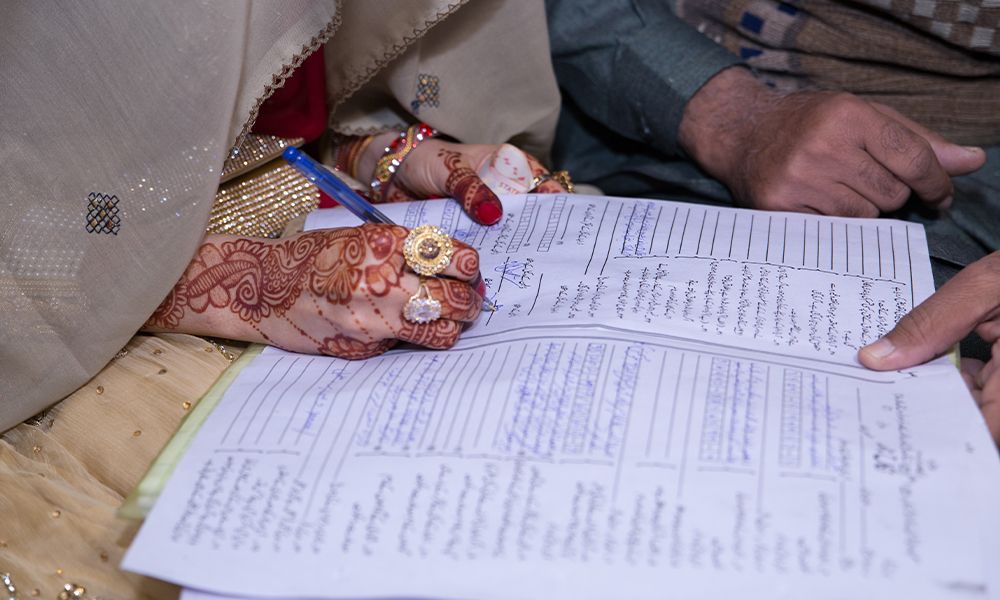
In the presence of at least two Muslim witnesses, the bride and groom sign the Nikah Nama—the marriage contract—which outlines their responsibilities and the agreed-upon mahr. The imam typically delivers a khutbah (sermon) emphasizing marital ethics, compassion, and the importance of maintaining harmony.
Following the signing, prayers and supplications are offered. The Dua is recited to seek Allah's blessings for the couple’s union. In some cultures, verses from the Qur’an are read aloud, reinforcing the spiritual aspect of the marriage. Families exchange greetings, and it's common for elders to give personal blessings and advice to the newlyweds.
Islamic tradition encourages a public declaration of marriage through the Walima, a celebration hosted by the groom’s side after the Nikah. This feast is considered a Sunnah (recommended practice) of the Prophet Muhammad and symbolizes joy, community inclusion, and gratitude. The scale of the event can vary, but simplicity is often emphasized to align with Islamic values.
While the foundational rites remain consistent across Muslim communities, cultural practices differ. In South Asia, henna nights (Mehndi), decorative attire, and musical gatherings are common.
Read this related article: Why Muslim Women Cannot Marry Non-Muslim Men
In the Middle East, traditional dances and extended family blessings are woven into the marriage journey. Regardless of the added customs, the essence of Islamic marriage—faith, mutual respect, and divine purpose—remains intact.






0 comments