
Your Read is on the Way
Every Story Matters
Every Story Matters
The Hydropower Boom in Africa: A Green Energy Revolution Africa is tapping into its immense hydropower potential, ushering in an era of renewable energy. With monumental projects like Ethiopia’s Grand Ethiopian Renaissance Dam (GERD) and the Inga Dams in the Democratic Republic of Congo, the continent is gearing up to address its energy demands sustainably while driving economic growth.
Northern Kenya is a region rich in resources, cultural diversity, and strategic trade potential, yet it remains underutilized in the national development agenda.

Can AI Help cure HIV AIDS in 2025

Why Ruiru is Almost Dominating Thika in 2025

Mathare Exposed! Discover Mathare-Nairobi through an immersive ground and aerial Tour- HD

Bullet Bras Evolution || Where did Bullet Bras go to?
A Profound Gesture of Reverence
The recent funeral of the Pope was marked by a deeply symbolic and moving moment: 14 individuals were chosen to carry his coffin. This act was not merely a physical task, but a gesture rich in meaning. The selection of 14 bearers instead of the traditional 12 adds an extra layer of symbolism that speaks to the Church’s theology, history, and sense of unity. In this article, we explore why this particular number was chosen and what it represents within the context of the Pope’s passing and the larger tradition of the Catholic Church.
The Significance of the Number 14: A Deeper Connection
At first glance, the number 14 may seem unusual, especially given that 12 has long been the symbolic number associated with Christian traditions. However, 14 also holds a rich and multifaceted meaning in biblical and Christian contexts. It’s the product of two important biblical numbers: 7 and 2. The number 7, in Christian tradition, is seen as the number of perfection and completion, often associated with divine intervention and the covenant between God and humanity. The number 2 represents duality, such as the union of the divine and human in Christ, or the balance of faith and reason.
In this context, 14 can be understood as a number that amplifies the completeness and the union of divine and earthly missions. The Pope’s death marked a transition from one phase of the Church to another, symbolizing both an ending and a beginning. By selecting 14 bearers, the Church emphasized the completeness of the Pope’s spiritual legacy and the continuing, unbroken mission of the Church.
Historical Context: Rites of Passage and Sacred Traditions
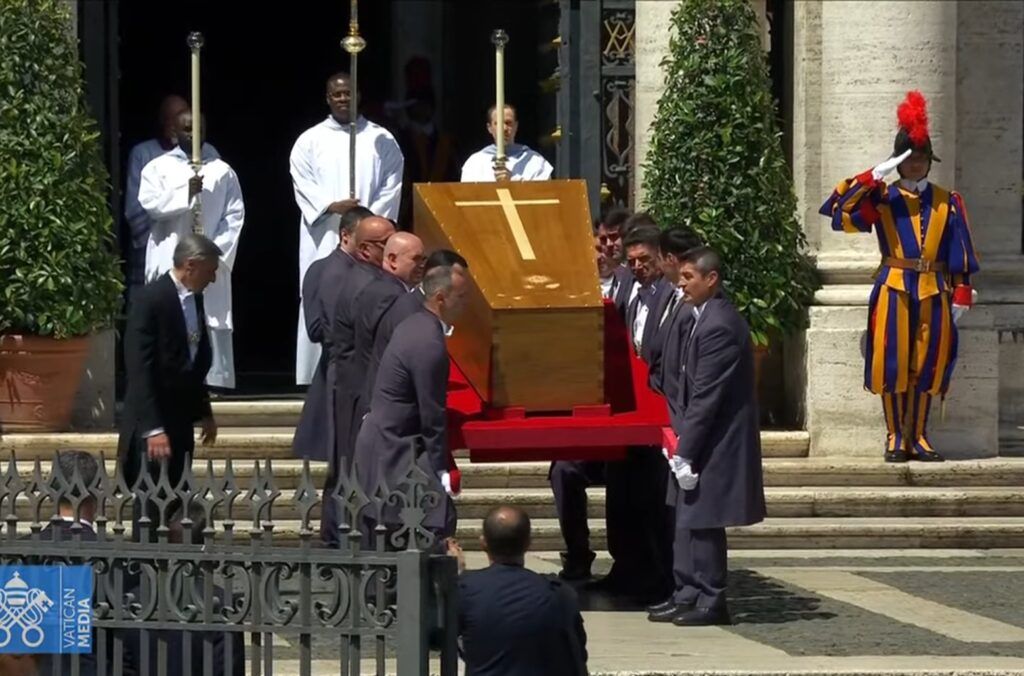
Throughout Christian history, numbers in religious rituals are carefully selected for their spiritual resonance. While 12 is often used to honor the Apostles, the choice of 14 in this case could also be seen as a continuation of certain historical practices. In the Bible, the genealogy of Christ is often divided into segments of 14 generations, showing both continuity and fulfillment of divine promise. The choice to have 14 bearers carrying the Pope’s coffin may be an extension of this tradition, drawing on the idea of a complete and divinely guided lineage.
Moreover, the Catholic Church has always been meticulous about maintaining rituals that connect the present with the past. The Pope’s funeral procession, like many others, reflects this ongoing commitment to honoring the ancient customs of the faith while also adapting them to the present moment. The number 14, as an extension of the 12 Apostles, underscores this connection to both the past and the future, symbolizing the Pope as the bridge between the two.
Symbolism of Unity: A Collective Act of Service
While the number 14 is deeply symbolic, it also speaks to the collective nature of the Church. The 14 bearers were not just individuals chosen for their roles; they represented the unity of the entire Catholic community. Christianity teaches that the Church is a body, and that every member contributes to its strength and mission. The 14 individuals who bore the Pope’s coffin were not just carriers of a physical body—they were carriers of the Pope’s spiritual legacy, entrusted with honoring his life’s work.
In this act, we see a representation of the Church's global and interconnected community. The 14 bearers came together from different walks of life, but they shared one common purpose: to pay tribute to the Pope. Their role emphasizes the idea that no one individual is greater than the collective body of believers, and that together, the Church continues its sacred mission.
A Message of Continuity and Renewal
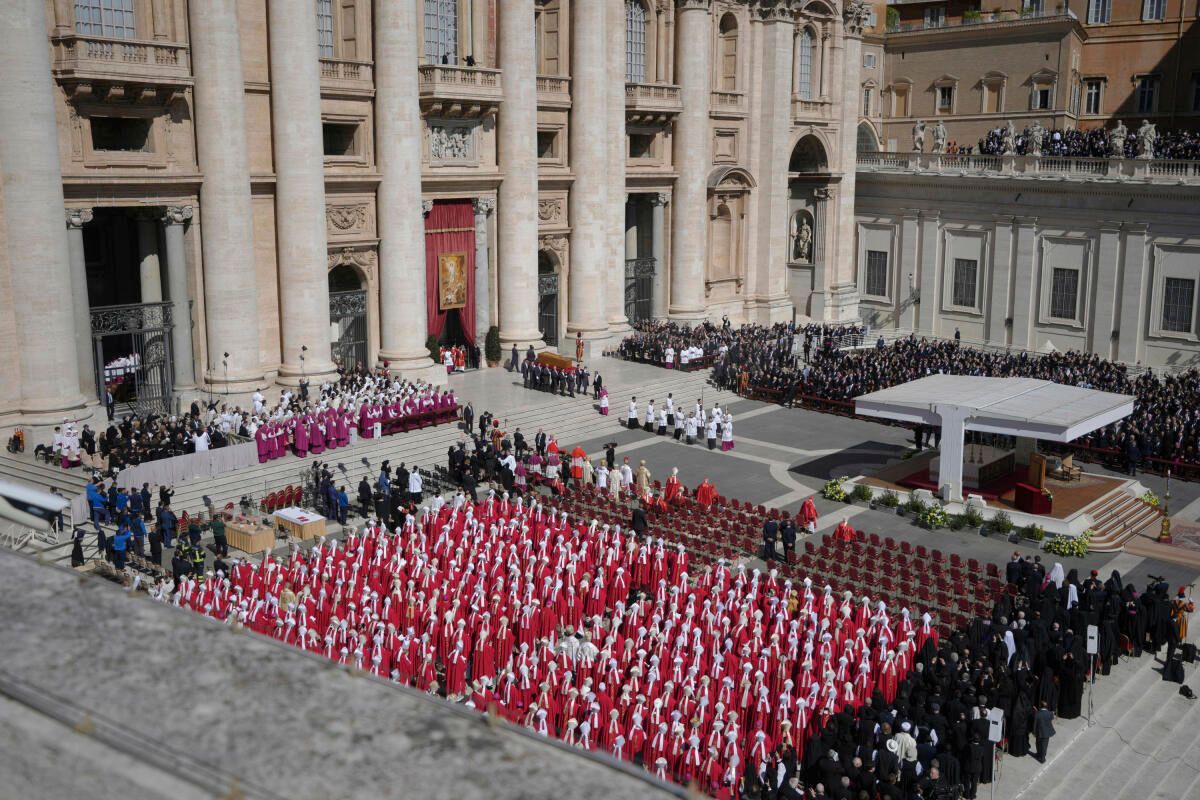
The act of carrying the Pope’s coffin with 14 bearers also speaks to the idea of continuity and renewal within the Church. The number 14, as an extension of the 12 Apostles, can be seen as a continuation of the Church’s foundational mission. Just as the Apostles were tasked with spreading the message of Christ, so too are the members of the Church tasked with continuing that mission in the modern world.
In the face of the Pope’s passing, this gesture of carrying his coffin with 14 people represents the idea that the Church’s work is not finished. It is an ongoing journey, one that continues through the efforts of its faithful, united in their commitment to the teachings of Christ. The number 14, with its rich biblical significance, underscores that the Church’s mission is complete yet always in progress, renewing itself with each generation.
A Final Tribute: Honoring the Pope's Legacy
The decision to have 14 bearers carry the Pope’s coffin was not simply an act of tradition or ritual. It was a profound tribute to the Pope’s life and legacy, imbued with deep theological and symbolic meaning. The number 14, representing completeness, divine balance, and unity, was a fitting tribute to a man whose life was dedicated to bridging the earthly and the divine. It reminded the faithful that while the Pope had passed, his influence would continue to resonate through the Church and its global community.
By choosing 14 people to carry the Pope’s coffin, the Church conveyed a powerful message: that the Pope’s work is not over, and that the mission of the Church, though deeply rooted in history, continues to evolve and thrive through the unity of its people.






0 comments