
Your Read is on the Way
Every Story Matters
Every Story Matters
The Hydropower Boom in Africa: A Green Energy Revolution Africa is tapping into its immense hydropower potential, ushering in an era of renewable energy. With monumental projects like Ethiopia’s Grand Ethiopian Renaissance Dam (GERD) and the Inga Dams in the Democratic Republic of Congo, the continent is gearing up to address its energy demands sustainably while driving economic growth.
Northern Kenya is a region rich in resources, cultural diversity, and strategic trade potential, yet it remains underutilized in the national development agenda.

Can AI Help cure HIV AIDS in 2025

Why Ruiru is Almost Dominating Thika in 2025

Mathare Exposed! Discover Mathare-Nairobi through an immersive ground and aerial Tour- HD

Bullet Bras Evolution || Where did Bullet Bras go to?
Hidden deep in Ethiopia’s Omo Valley lies a tradition that defies conventional ideas of beauty and strength. Among the semi-nomadic Bodi (also known as Me’en) tribe, the Ka’el Festival is a once-a-year event that transforms lean young men into swollen symbols of masculinity. It is not about war or dancing—but about fat, endurance, and symbolic fertility.
The Ka’el is more than a contest. It is a ceremonial proving ground, where body, tradition, and status collide in one of Africa’s most visually striking cultural rites.
The festival preparation begins six months before the big day. Young unmarried men, chosen by their families, are sequestered in huts, away from women and most social interaction. During this period, they begin a brutal daily regimen of drinking a specially prepared mixture—a thick blend of cow’s blood and raw milk, consumed in enormous quantities, often from large gourds.
There is no solid food, no physical activity, and virtually no contact with the outside world. The purpose? To gain as much body fat as humanly possible. Vomiting is common; discomfort is expected. But giving up is dishonor. Each man must push through the nausea, bloating, and heat, transforming his body into a walking symbol of tribal abundance.
When the six months end, the village gathers for Ka’el. The men emerge—slowly, heavily, sometimes needing help to walk. They are covered in ashes or ochre, their swollen bellies leading the way. This is not a bodybuilding show. There are no muscles to flex. The victor is the man who has gained the most weight and symmetry, appearing strong, round, and full of life.
The contest is accompanied by chants, drumming, and ritual songs, with elders and women cheering. The winner is not awarded money or material gifts. Instead, he is celebrated as a hero, gaining prestige for his family and clan. For the year that follows, he walks taller—respected, desired, and elevated in status.
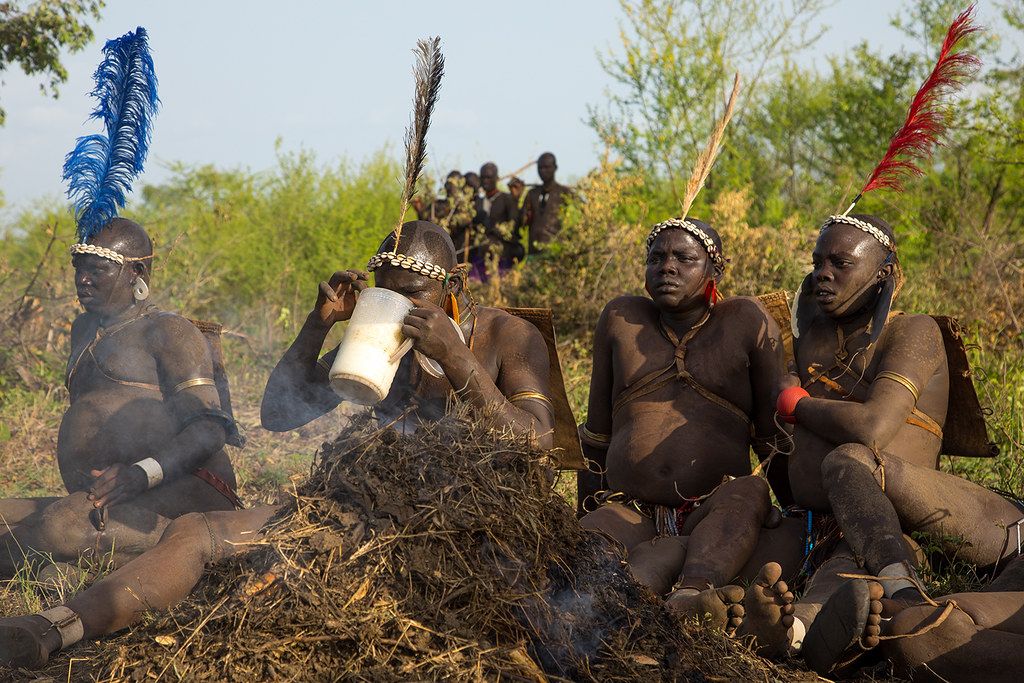
To the Bodi, this is not spectacle—it is sacred. Fatness during Ka’el is not laziness or gluttony; it is power, fertility, and blessing. A fat man is a symbol of agricultural prosperity, cattle wealth, and clan vitality. The winner embodies all these.
In fact, the Ka’el Festival serves as a rite of passage, moving young men one step closer to marriage, leadership, and adulthood. It’s also a communal reaffirmation of identity—especially important for a tribe that has resisted the pull of modernization and globalization.
The Ka’el Festival remains largely unseen by outsiders, as the Bodi tribe guards its privacy and traditions. Photography and visitation are rare and, in most cases, discouraged unless permitted by tribal elders. This is a ritual meant for the Bodi, not the cameras.
Still, as Ethiopia undergoes rapid changes, there is growing concern that this festival—and others like it—may face pressures from modernization, external influence, or climate impact on pastoral life.
The Ka’el Festival is not just a fattening contest. It is a deeply symbolic and demanding cultural performance that merges endurance, beauty, and honor. In a world obsessed with slimness and speed, the Bodi tribe honors stillness, slowness, and the transformation of flesh into legacy.






0 comments