
Your Read is on the Way
Every Story Matters
Every Story Matters
The Hydropower Boom in Africa: A Green Energy Revolution Africa is tapping into its immense hydropower potential, ushering in an era of renewable energy. With monumental projects like Ethiopia’s Grand Ethiopian Renaissance Dam (GERD) and the Inga Dams in the Democratic Republic of Congo, the continent is gearing up to address its energy demands sustainably while driving economic growth.
Northern Kenya is a region rich in resources, cultural diversity, and strategic trade potential, yet it remains underutilized in the national development agenda.

Can AI Help cure HIV AIDS in 2025

Why Ruiru is Almost Dominating Thika in 2025

Mathare Exposed! Discover Mathare-Nairobi through an immersive ground and aerial Tour- HD

Bullet Bras Evolution || Where did Bullet Bras go to?
Hindu weddings are elaborate and deeply spiritual affairs marked by centuries-old customs and symbolic rituals. While regional and community-specific variations exist, the core structure of a traditional Hindu wedding is steeped in Vedic principles, with an emphasis on dharma (duty), karma (action), and samskara (sacraments). The ceremony is not merely the union of two individuals but a sacred covenant between two families, bound together by tradition and spirituality.
The Roka marks the formal initiation of the wedding proceedings. It is a private ceremony in which the families of the bride and groom give their mutual consent to the union, bless the couple, and commence the wedding arrangements.
Turmeric paste is ceremonially applied to the bride and groom in their respective homes. This ritual is believed to purify the body and spirit, ward off evil, and impart a radiant glow to the skin.
Traditionally held one or two days before the wedding, the Mehndi ceremony involves intricate henna designs being applied to the bride’s hands and feet. This is accompanied by traditional music, singing, and dancing, symbolizing joy and auspiciousness.
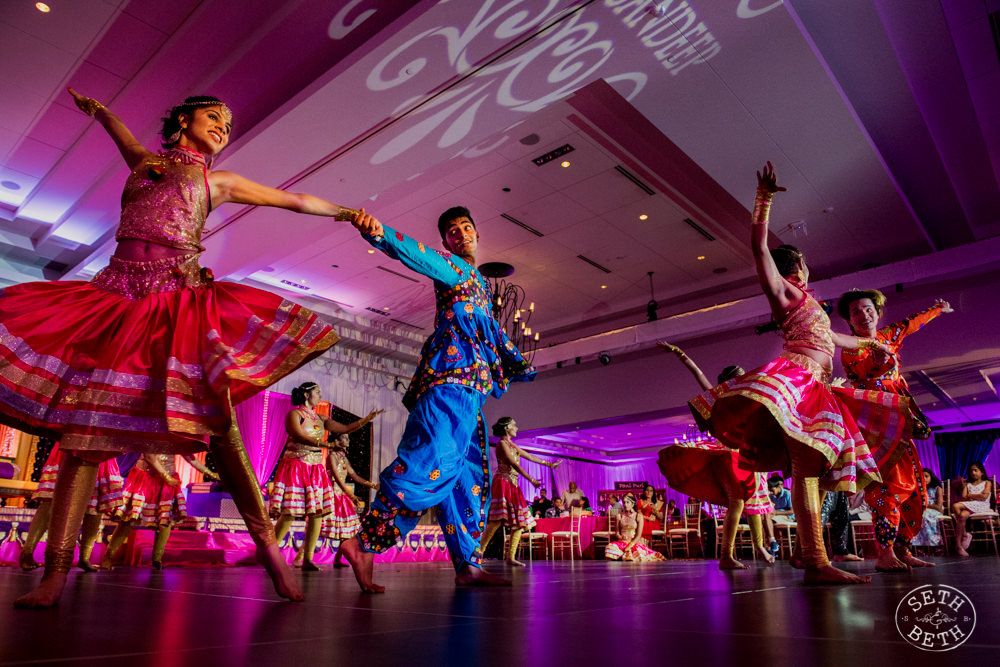
The Sangeet is a musical gathering where both families come together for an evening of dance, song, and light-hearted performances. It reflects the joyous union of not only the couple but also their extended families.
The groom arrives at the venue accompanied by family and friends in a jubilant procession. Often mounted on a horse or a decorated vehicle, the procession is marked by celebratory dancing and music, signifying his readiness for the wedding.
Senior members from both families meet formally, exchange garlands, and offer blessings. This signifies the unification of two family lineages.
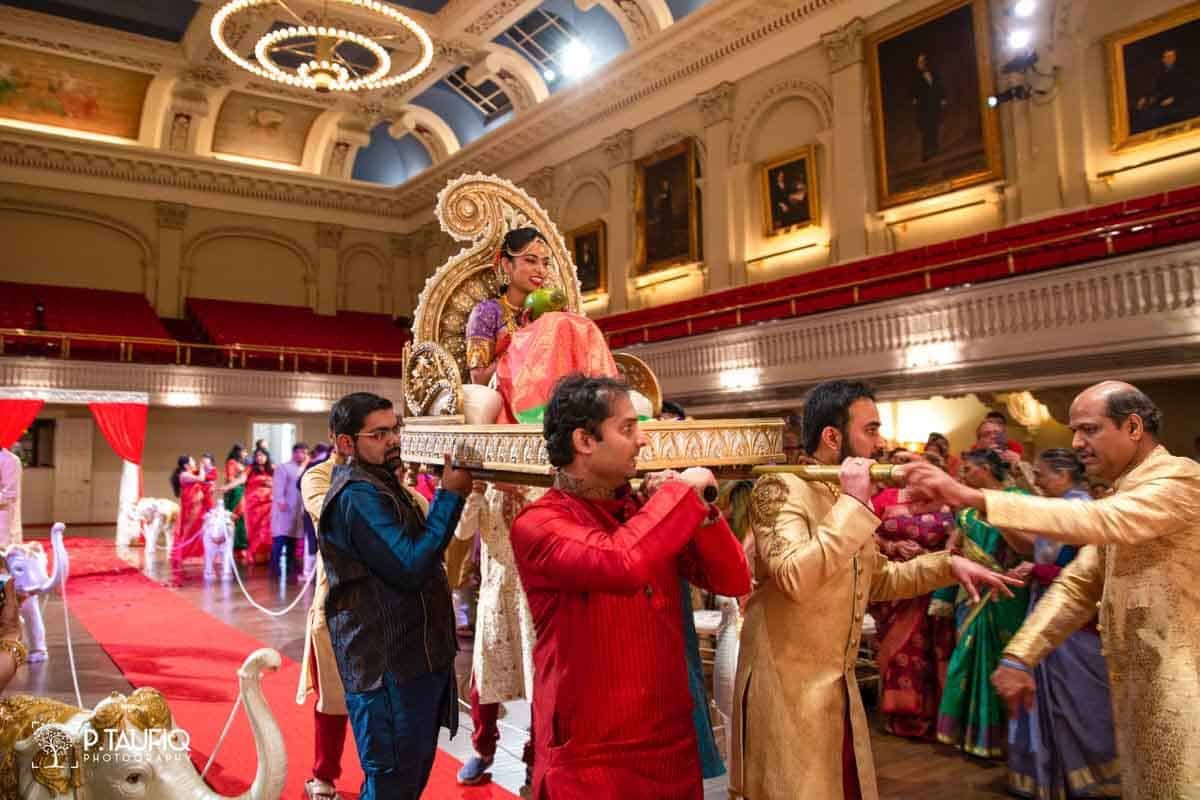
The bride is ceremoniously escorted to the wedding mandap (altar) by her maternal uncles or brothers. Her arrival is often accompanied by traditional music and cultural rituals.
The bride and groom exchange floral garlands, symbolizing their mutual acceptance and respect for one another.
This sacred act is performed by the bride’s father, who entrusts his daughter to the groom with the hope that she will be respected, protected, and cherished in her new household.
A sacred fire (Agni) is lit at the center of the mandap. The couple performs seven circumambulations around the fire, each round representing a specific marital vow relating to prosperity, loyalty, health, strength, and harmony.
With each of the seven steps taken together, the bride and groom make solemn vows to support one another through all phases of life. It is these steps that officially seal the marriage under Hindu law.

The groom ties a sacred necklace (mangalsutra) around the bride’s neck and applies vermilion (sindoor) in the parting of her hair—both acts signifying her new status as a married woman.
In a profoundly emotional ritual, the bride bids farewell to her parental home. As she leaves, she tosses rice or puffed grains over her head as a gesture of gratitude for the upbringing she received.
The bride is welcomed into the groom’s household through a ceremonial entry. She may be asked to knock over a pot of rice with her right foot, symbolizing prosperity and the start of her new domestic role.
A formal reception is usually held by the groom’s family to introduce the bride to extended family and friends. It is an occasion for social celebration, marked by feasting and blessings.
Hindu weddings are built upon sacred philosophies that extend beyond the material aspects of the ceremony. They represent a fusion of spiritual commitment, familial unity, and societal responsibilities. Each ritual carries profound meaning and is designed to reinforce the values of fidelity, compassion, and dharma throughout married life.
The Hindu wedding is, therefore, not only a significant cultural milestone but also a deeply spiritual rite that symbolizes the eternal bond of marriage through sacred vows and divine blessings.



0 comments